


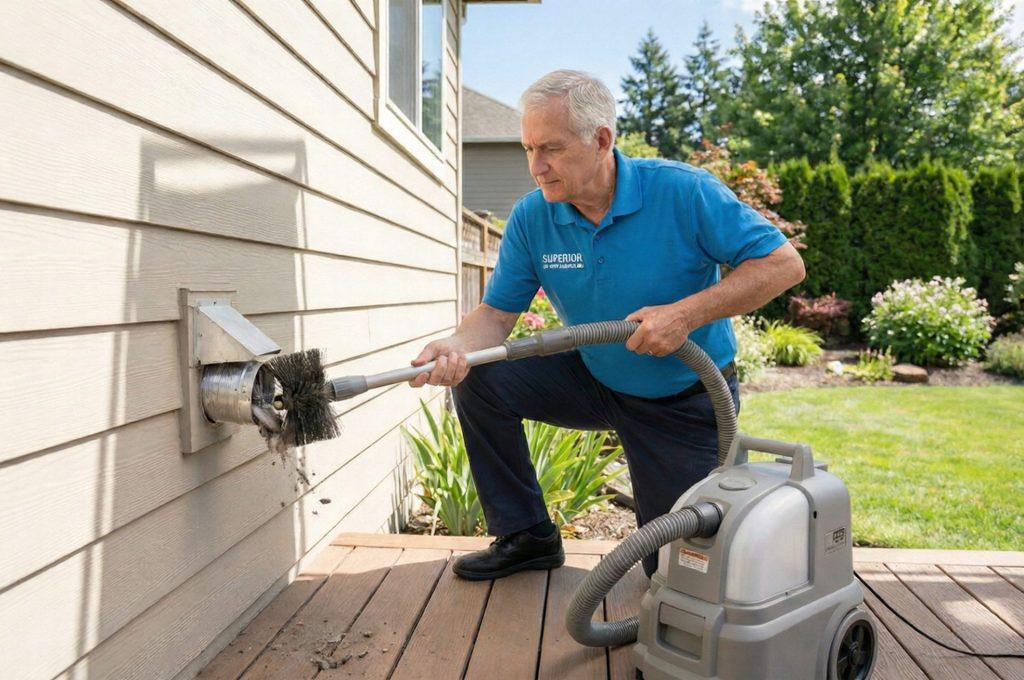
Protect Your Home: Professional Dryer Vent Cleaning in Willamina
Welcome to Dr. Carpet Clean, your trusted local source for comprehensive dryer vent cleaning and maintenance services throughout Willamina, Oregon and surrounding Yamhill County communities. For decades, our family-owned and operated business has been dedicated to protecting homes and families from the serious fire hazards associated with clogged dryer vents. We understand that dryer vent safety is not just about convenience—it’s about protecting your home, your family, and your peace of mind. Our certified professionals are committed to providing thorough, professional dryer vent cleaning services that reduce fire risk and improve appliance efficiency.
The Critical Safety Issue: Dryer Vent Fires in Willamina
Why Dryer Vent Cleaning Matters for Home Safety
Did you know that clothes dryer fires are one of the leading causes of home structure fires in the United States? According to the U.S. Consumer Product Safety Commission (CPSC), approximately 15,500 clothes dryer fires occur annually, resulting in an average of 10 deaths, 310 injuries, and over $84 million in property damage. These alarming statistics represent preventable tragedies.
The National Fire Protection Association (NFPA) reports that between 2014 and 2018, U.S. fire departments responded to an estimated average of 14,630 home structure fires per year involving clothes dryers or washing machines. These fires resulted in an annual average of 13 civilian deaths, 444 civilian injuries, and $238 million in property damage.
Even more sobering, the U.S. Fire Administration (USFA) documents that every year, clothes dryer fires account for over $100 million in property losses. These are not distant statistics—they’re preventable fires happening in neighborhoods throughout Oregon and across America.
For Willamina residents, understanding and preventing dryer vent fires should be a household priority. Professional dryer vent cleaning is one of the most effective measures you can take to protect your home.
The Root Cause: Lint Accumulation
The primary culprit behind dryer vent fires is lint accumulation. When asked about the leading factors contributing to dryer fires, the NFPA reports that failure to clean the dryer (34%) and failure to clean the venting system (28%) are the leading contributors. This means that 62% of dryer fires could be prevented through regular cleaning and maintenance.
Lint is highly flammable. As clothes tumble in your dryer, lint fibers separate and circulate through the dryer and into the exhaust vent system. Most lint is captured by the lint trap, but the lint trap only captures lint traveling directly past it—lint still escapes into the ductwork. This escaped lint accumulates inside the vent system, creating an increasingly dangerous situation.
According to NFPA safety guidelines, approximately 27-28% of dryer fires are caused by accumulated lint that becomes heated to the point of ignition. The combination of:
- Highly flammable lint accumulation
- Restricted airflow from blockages
- Extreme heat from the dryer
- Confined space in the vent system
…creates a perfect environment for spontaneous combustion.
Local Community Profile: Willamina, Oregon
Willamina is a vibrant residential community in Yamhill County with approximately 2,286 residents (2025 estimates). Our community features:
- Median household income: $56,211 (according to Data USA)
- Median age: 39 years, indicating a stable, family-focused community
- Housing composition: Primarily owner-occupied, single-family homes
- Rural character: 100% rural living environment with tight community bonds
As a family-oriented community, Willamina residents depend on their homes for safety and security. Professional dryer vent cleaning is an essential part of responsible home maintenance and family protection.
Yamhill County’s Residential Landscape
Willamina is part of Yamhill County, a thriving region in Oregon’s Willamette Valley with:
- Population: Approximately 108,122 residents (2023 data from Data USA)
- Median household income: $87,084
- Median age: 39.5 years
- Housing focus: Strong homeownership rates with established residential neighborhoods
Throughout Yamhill County, families depend on their dryers for essential household laundry. Professional vent cleaning ensures these appliances operate safely.
How Dryer Vents Become Dangerous
Understanding Lint Accumulation
Unlike dust that settles gradually, lint accumulation in dryer vents is insidious and progressive. Here’s how it develops:
Initial Stage (Months 1-6): Lint begins accumulating in the vent system, but visible signs are minimal. Clothes may dry normally, and you notice nothing amiss. However, lint is already building up in areas you can’t see.
Progressive Stage (Months 6-18): Lint accumulation increases noticeably. You may observe:
- Clothes taking slightly longer to dry
- The dryer running hotter than before
- More lint visible in and around the dryer area
- The outdoor vent showing reduced exhaust when operating
Critical Stage (18+ Months): Significant lint blockage creates dangerous conditions:
- Clothes taking substantially longer to dry (sometimes requiring multiple cycles)
- The dryer feeling extremely hot to the touch
- Burning smells when the dryer operates
- Reduced or no visible exhaust at the outdoor vent
Danger Zone: Without intervention, a clogged vent system creates ideal conditions for fire. The combination of restricted airflow, trapped heat, and highly flammable lint creates a potential ignition source.
The Lint Trap Myth
Many homeowners believe that cleaning the lint trap after each load is sufficient protection. The CPSC and NFPA both emphasize the importance of professional vent cleaning, noting that lint traps capture only lint directly passing through them.
Lint escapes around the lint trap edges and throughout the entire vent system. A lint trap removes only the lint that flows directly past it, leaving the remainder of the system unprotected. This is why professional vent cleaning extending to the outdoor vent termination is essential.
The Physics of Dryer Fire Hazards
Understanding the mechanics of how dryer vent fires occur helps illustrate the critical importance of professional cleaning. As clothes tumble in your dryer, they generate lint—tiny fibers that separate from fabrics through friction and heat. These fibers are lightweight and travel easily through air currents created by the dryer’s blower fan.
The lint filter captures lint that flows directly past it, but escaped lint travels through the entire vent system, accumulating at points where airflow slows or changes direction. Elbows, horizontal runs, and sections with reduced diameter all become lint accumulation points.
As lint accumulates, it:
- Restricts airflow through the vent system
- Forces the dryer to work harder and run hotter
- Prevents proper heat exhaustion outside
- Creates a confined, flammable mass directly exposed to extreme temperatures
When restricted airflow causes vent temperatures to rise to 350-400°F or higher, lint—which is highly flammable—can spontaneously ignite. This ignition can occur without external flame or spark; the heat alone is sufficient for combustion.
Once ignition begins, lint burns intensely, creating a fire that spreads rapidly through the vent system toward your home and potentially into walls, attics, or other building spaces.
Environmental Factors Specific to Willamina
Willamina’s location in Oregon’s Willamette Valley creates specific environmental conditions affecting dryer vent safety:
Northwest Moisture: Oregon’s high humidity and moisture-rich environment presents unique challenges for dryer vent safety. While lint itself doesn’t absorb water, moisture in the air can cause lint to adhere more tenaciously to vent walls, accelerating accumulation rates. Additionally, when lint becomes dampened, it packs more densely, creating more restrictive blockages that increase fire risk.
In Willamina’s climate, the combination of lint and moisture creates a particularly dangerous situation. Lint that would remain loose and somewhat mobile in drier climates becomes compressed and adhered in our Pacific Northwest environment, requiring more aggressive professional cleaning to remove.
Seasonal Variations: Winter months bring substantially increased dryer use for heavy fabrics, blankets, towels, and bedding. This increased lint production combines with cooler outdoor temperatures to create slower lint movement through vents and faster accumulation.
The USFA reports that dryer fires peak during winter months, with January being the leading month for dryer fires at 10.6% of annual fires. This seasonal peak coincides with peak dryer usage in colder climates and demonstrates that increased lint production is directly correlated with fire risk.
For Willamina residents, this means that fall and winter lint accumulation can be substantial. Professional fall cleaning before heavy winter use provides critical fire prevention.
Outdoor Vent Exposure: Willamina’s weather includes significant wind, frequent rain, and temperature fluctuations that can affect external vent terminations. Additionally, our region’s abundant wildlife means bird nests are a common vent blockage source. Weather-related debris, bird nests, and wind-driven lint can completely block exterior vents, preventing proper vent exhaustion and accelerating dangerous interior lint accumulation.
Spring and Fall Transitions: Our region’s rainy fall and spring seasons can result in moisture accumulation in outdoor vents and ductwork. As temperatures fluctuate, condensation can form inside vents, causing lint to stick more aggressively. Professional cleaning after heavy rain seasons helps prevent moisture-related lint accumulation issues.
Vent System Design Challenges
Long Vent Runs: Many Willamina homes feature vent systems running considerable distances from the dryer location to exterior walls or roofs. Each additional foot of ductwork increases lint accumulation risk. A vent run longer than 25 feet presents significantly higher fire risk than a short, direct run.
Multiple Elbows and Turns: Building layouts often require ductwork with multiple 90-degree turns. Each turn creates a point where airflow slows and lint settles. Systems with three or more turns accumulate lint far more rapidly than straight runs.
Mixed Duct Types: Homes with transitions between rigid metal ductwork and flexible transition hoses present particular challenges. The junction points and the flexible duct’s accordion-style ridges trap lint, accelerating accumulation.
Undersized Ductwork: Some installations use 3-inch diameter ductwork or smaller transition ducts. The NFPA and CPSC recommend 4-inch ductwork for proper lint flow, and undersized systems accumulate lint much more rapidly and present greater fire risk.
Common Vent System Problems
Flexible Transition Ducts: Many homes connect dryers to rigid ductwork using flexible transition hoses. The NFPA specifically warns against plastic or accordion-style flexible ducts, noting that these can sag, trap lint in ridges, and create fire hazards.
Flexible accordion-style ducts are particularly problematic because their ridged interior surfaces trap lint more readily than smooth metal ducts. As lint accumulates in the ridges, airflow becomes increasingly restricted. Additionally, these ducts can sag over time, creating low points where lint settles and compacts. Finally, flexible ducts are often constructed of plastic or thin foil materials that melt or ignite more easily than rigid metal ductwork if fire does occur.
The NFPA and Consumer Product Safety Commission recommend rigid metal ductwork for all dryer installations. If your home has flexible transition ducts, professional assessment is essential to evaluate whether your system presents elevated fire risk.
Long or Complicated Ductwork: Vent systems running long distances, with multiple turns, or through attics accumulate lint more rapidly than short, straight ductwork. The longer the path to the exterior, the more opportunities for lint to settle and restrict airflow.
Homes where the dryer is located far from exterior walls require extended vent runs that present particular challenges. Industrial standards indicate that every 25 feet of ductwork can require more frequent professional cleaning. Additionally, each 90-degree turn in ductwork reduces airflow efficiency and increases lint accumulation potential.
Complex vent systems that run through attics, wall cavities, or crawl spaces present additional hazards. If lint escapes through holes or gaps in the ductwork, it can accumulate in building cavities where it becomes inaccessible and creates hidden fire hazards.
Damaged or Deteriorating Vents: Older ductwork may have cracks, separated seams, or corrosion that allows lint to escape into wall cavities and attics, creating additional fire hazards beyond the vent itself. Older homes with uninsulated or poorly installed ductwork frequently present this problem.
As ductwork ages, connections can loosen, allowing lint to escape. Sheet metal ducts can develop small holes or corrosion spots that allow lint to escape. Flexible ducts develop cracks and tears. In all cases, escaped lint can accumulate in wall cavities, attics, or crawl spaces where it remains inaccessible and presents serious fire hazards.
Improper Exterior Terminations: Some homes vent into attics, crawl spaces, or wall cavities instead of directly outdoors. These improper venting configurations are serious fire hazards. Additionally, they create indoor air quality problems and promote mold growth by exhausting warm, moisture-laden air into confined building spaces.
Exterior terminations must be designed to prevent lint from escaping and to allow proper heat and moisture exhaustion. Open vents, vents with inadequate louvers, or vents with bird screens that restrict airflow all create problems. Poor exterior terminations can create resistance that builds back-pressure into your dryer, increasing fire risk.
Bird Nests and Wildlife Blockages: Willamina’s abundant wildlife loves dryer vents as nesting locations. Birds, rodents, and other animals nest in dryer vents, completely blocking exhaust and creating serious fire hazards. Signs of wildlife in your vent include reduced exhaust, nesting materials visible in vents, or animal sounds.
If you observe signs of wildlife in your dryer vent, professional cleaning is essential. Additionally, you may want to install a wildlife-resistant vent hood designed to prevent animals from entering while maintaining proper airflow.
Signs Your Dryer Vent Needs Professional Cleaning
Warning Signs That Demand Immediate Attention
Longer Drying Times: If clothes are taking longer than usual to dry, particularly heavy items like jeans, towels, or blankets, restricted airflow is almost certainly the cause. This is often the earliest warning sign of vent blockage.
Excessive Heat: Clothes feeling unusually hot after drying, or the dryer exterior feeling extremely hot to the touch, indicates that heat is being trapped inside the system rather than properly exhausted. This is a serious warning sign.
Burning Odors: Any smell of burning when the dryer operates should trigger immediate action. This may indicate lint is being heated dangerously close to ignition temperature.
Visible Lint Accumulation: Lint visible around the dryer exterior, in the laundry room, or escaping from vents indicates significant system blockage.
No Visible Exhaust: Check the exterior vent opening during dryer operation. You should feel warm air and see moisture vapor. If you observe no exhaust, the vent is likely blocked. This is a red-alert situation requiring immediate professional attention.
Moisture in Laundry Room: If your laundry room feels damp or musty when the dryer operates, the vent system is not properly exhausting moisture outside. This indicates blockage and creates both fire risk and mold growth potential.
Tripping Thermal Fuses: Some modern dryers have thermal safety features that shut down the dryer if it overheats. If your dryer frequently shuts off mid-cycle, this is a sign of airflow restriction and vent blockage.
Regular Maintenance Schedule
The NFPA recommends professional dryer vent cleaning at least once per year for most residential situations. However, more frequent cleaning is recommended if:
- You use your dryer daily or multiple times daily
- You have a large household with substantial laundry loads
- Your vent system is long or includes multiple turns
- You notice any of the warning signs listed above
- You have pets whose hair and dander increase lint production
- You experience heavy seasonal use (winter months particularly)
Professional Dryer Vent Cleaning Process
Our Comprehensive Service Approach
Dr. Carpet Clean provides thorough dryer vent cleaning services that address the entire vent system, not just easily accessible areas.
Step 1: Safety Assessment and Inspection We begin with a complete inspection of your dryer and entire vent system. This includes:
- Examination of the dryer exterior and lint trap area
- Assessment of the transition duct from dryer to wall/ductwork
- Inspection of visible ductwork sections
- Evaluation of the exterior vent termination
- Documentation of any damaged sections or safety concerns
Step 2: System Disconnection and Protection We safely disconnect the dryer (including gas valve shutdown for gas dryers), protecting your home and appliance from damage during cleaning.
Step 3: Interior Dryer Chamber Cleaning We clean the interior of the dryer drum, housing, and heating element area, removing lint that has bypassed the lint trap and accumulated inside the appliance.
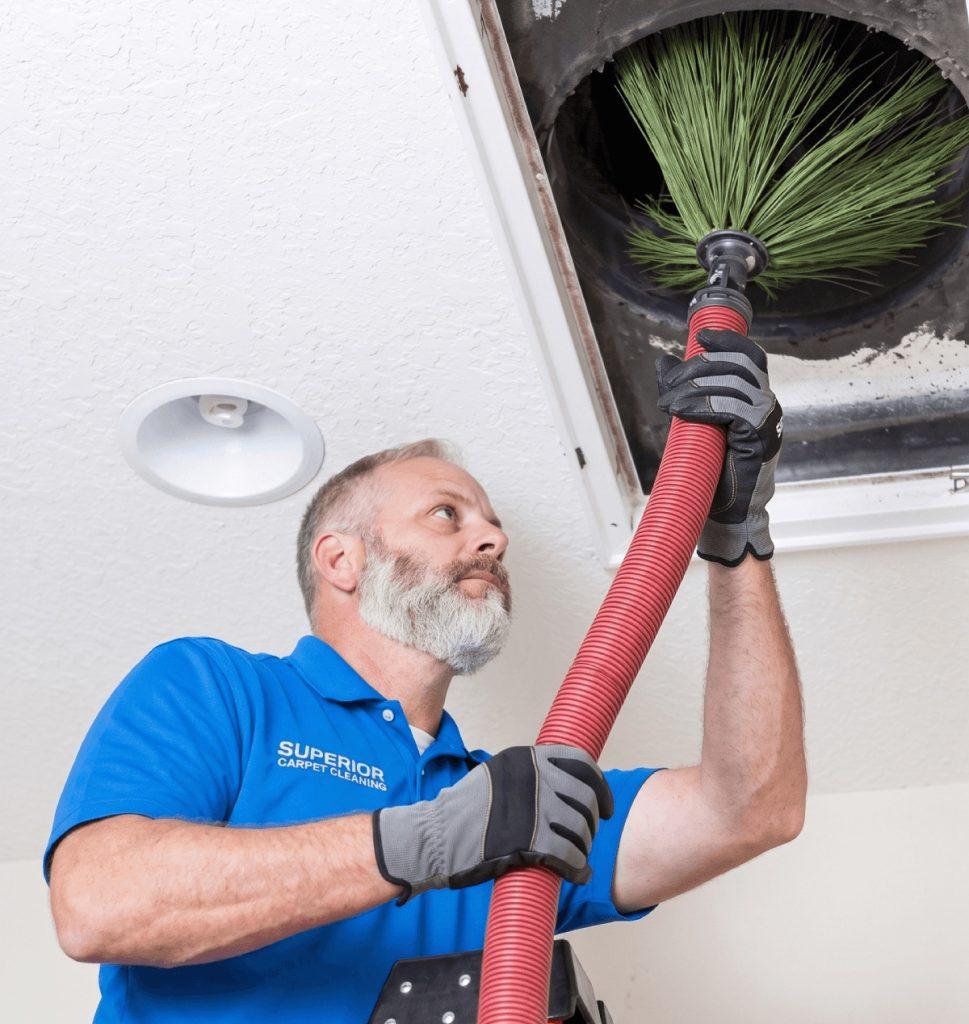
Step 4: Ductwork Cleaning from Inside Out Using specialized equipment, we clean the entire duct system from the dryer connection point to the exterior vent termination. Our high-powered vacuum systems capture dislodged lint without releasing it into your home.
Step 5: Exterior Vent Termination Cleaning We thoroughly clean the exterior vent hood and termination, removing any bird nests, accumulated lint, weather debris, or blockages.
Step 6: System Testing and Verification After cleaning, we test the system to verify proper airflow restoration. You should notice immediate improvement in drying performance.
Step 7: Professional Reconnection and Testing We carefully reconnect the dryer, test system operation, and verify all safety features function properly.
Why Professional Service Exceeds DIY Approaches
While some homeowners attempt dryer vent cleaning themselves using vacuum attachments or purchased vent cleaning kits, professional service provides critical advantages:
Complete System Access: Professional equipment reaches the entire vent system from interior to exterior termination. DIY approaches typically clean only easily accessible sections.
Proper Lint Capture: Our sealed, negative-pressure systems capture lint without releasing it into your home or scattering it throughout your laundry room.
Safety Expertise: We identify safety issues like improper venting, damaged ductwork, or hazardous configurations that DIY approaches might miss.
Fire Prevention Verification: We verify that your system is venting properly and safely, providing documentation and peace of mind.
Equipment Expertise: Professional-grade equipment designed specifically for dryer vent cleaning is far more effective than consumer-level tools.
Real Results: What to Expect After Professional Dryer Vent Cleaning
Immediate Benefits
Dramatically Improved Drying Performance: The most immediately noticeable benefit is faster drying times. Clothes that previously required multiple cycles to dry completely may now dry in a single cycle. Heavy items like jeans, towels, and bedding dry significantly faster. This improvement is often dramatic and immediately apparent after the first load after cleaning.
Cooler Dryer Operation: A cleaned vent system allows heat to exhaust properly rather than building up inside the dryer. You’ll notice the dryer exterior stays cooler, the laundry room doesn’t become hot and humid, and clothes no longer feel scalding hot after drying. This cooler operation is not only more comfortable but indicates safer function.
Fresh Laundry Room: A clean vent system no longer traps heat and moisture in your laundry room. The area stays cooler and drier. Any musty or burning odors from the dryer operation disappear.
Eliminated Burning Smells: If you noticed burning odors before cleaning, they disappear immediately. This dramatic improvement is reassuring and indicates that dangerous lint accumulation has been removed.
Medium-Term Benefits
Measurable Energy Savings: Within the first month of operation after professional cleaning, energy bills begin reflecting improved efficiency. Your dryer requires less runtime to achieve drying goals, consuming less energy. Savings vary based on usage frequency, but many households see $15-40 monthly reductions in utility bills for dryer-related energy costs. Annualized savings can total $180-480 per year.
Improved Air Quality: Proper vent exhaust removes moisture and heat from your home more efficiently. Your laundry room stays drier, reducing mold and mildew growth potential. Your home’s overall humidity levels improve as proper ventilation functions effectively.
Reduced Wear and Tear: Your dryer operates more efficiently, with less strain on components. The heating element isn’t overworked, the blower fan operates at proper levels, and thermal safety features don’t trigger unnecessarily. This reduced strain extends your dryer’s lifespan.
Peace of Mind: Perhaps the greatest benefit is peace of mind knowing your dryer vent system is clean and safe. You’ve eliminated a serious fire hazard in your home and protected your family. This psychological benefit—knowing you’ve taken responsible action to prevent a potentially devastating fire—is invaluable.
Long-Term Benefits and Cumulative Savings
Extended Appliance Life: A dryer operating efficiently with a clean vent system lasts significantly longer than one constantly fighting lint blockages and overheating. You may extend your dryer’s lifespan by several years through regular professional cleaning.
Annual Cumulative Savings: Over a year, the combination of energy savings ($180-480), extended appliance life, and reduced repair needs provides substantial financial benefit. For many households, annual professional cleaning pays for itself through energy savings alone.
Avoided Disaster Costs: While impossible to calculate, the potential cost avoidance is enormous. A dryer fire could result in thousands of dollars in property damage, temporary housing costs, belongings replacement, and potential liability if the fire spread to neighbors’ properties.
Insurance Benefits: Some insurance companies offer discounts for documented regular dryer vent maintenance. Homeowners who maintain regular professional cleaning may qualify for small insurance premium reductions—another financial benefit.
Verification and Documentation
Dr. Carpet Clean provides documentation of professional cleaning services. This documentation is valuable for:
- Insurance purposes and potential claim processes
- Home sale documentation demonstrating proper maintenance
- Your own records of safety-related home maintenance
- Peace of mind confirmation that services were completed
Why Professional vs. DIY Cleaning
The Limitations of Do-It-Yourself Approaches
Many homeowners attempt dryer vent cleaning themselves using:
- Vacuum attachments and consumer dusting tools
- Purchased dryer vent cleaning kits (brush and rod systems)
- Rented equipment from hardware stores
- YouTube tutorials and online guides
While these approaches are well-intentioned, they consistently fall short for several reasons:
Limited Reach: Consumer equipment typically cleans only 10-15 feet of ductwork, leaving much of your system untouched. If your vent run is 25 feet or longer, the majority of accumulated lint remains in your system.
Insufficient Suction Power: Rented equipment lacks the negative-pressure suction of professional systems. Lint is dislodged but not fully removed, spreading through your system or dropping into wall cavities.
No Exterior Access: DIY approaches typically cannot reach the exterior vent termination, leaving the final stage of lint accumulation untouched.
Potential for Damage: Improper technique can damage flexible ducts, disconnect ductwork joints, or create additional problems requiring professional repair.
Safety Concerns: Disconnecting dryers (particularly gas dryers) without proper training can damage gas lines, create safety hazards, or result in improper reconnection.
Incomplete Dryer Cleaning: DIY approaches rarely clean the interior of the dryer itself, where lint that bypassed the lint trap accumulates in the blower housing and heating chamber.
Professional cleaning addresses all areas of your entire vent system from the dryer interior to the exterior termination, with equipment specifically designed for the job.
Safety, Warranty, and Liability Considerations
Professional services provide:
- Properly trained technicians with safety certifications
- Equipment designed for dryer vent cleaning and safety
- Liability insurance protecting you if damage occurs
- Proper reconnection following manufacturer guidelines
- Verification that your system operates safely
If problems occur during professional cleaning, our insurance covers damages. DIY cleaning provides no such protection.
Dr. Carpet Clean proudly serves Willamina and all surrounding communities throughout Yamhill County and beyond.
Primary Service Area
Willamina: We serve Willamina homes with quick response times and personalized service.
McMinnville (15 miles northeast): Yamhill County’s largest city with over 32,000 residents, McMinnville families benefit from our professional dryer vent cleaning. We serve McMinnville’s diverse neighborhoods and housing styles.
Newberg (12 miles north): Growing rapidly with modern residential developments, Newberg residents depend on our services for dryer vent safety and efficiency.
Lafayette (8 miles southeast): Historic Lafayette with its established neighborhoods and diverse housing styles benefits from our expertise with varied vent system configurations.
Sheridan (2 miles northeast): Our closest neighboring community receives convenient, prompt service.
Extended Service Territory
We also serve Amity, Dayton, Carlton, Yamhill, St. Paul, Dundee, and communities throughout the Willamette Valley, plus extended service areas into Portland region communities. Our multiple locations throughout the region ensure convenient access to professional dryer vent cleaning regardless of where you live.
Why Choose Local Over National Services
National dryer vent cleaning franchises may seem convenient, but local family-owned service like Dr. Carpet Clean offers distinct advantages:
Community Accountability: We live in the communities we serve. Our reputation depends on quality work and customer satisfaction with people we see at the grocery store and at community events.
Personalized Expertise: We assess each system individually, identifying specific hazards and tailoring our approach to your home’s unique configuration.
Fair Pricing: Without corporate overhead and franchise fees, we provide competitive pricing that reflects the actual value of services.
Quick Response: As a local business, we can schedule service conveniently without waiting weeks for availability.
Proven Track Record: Our five-star ratings reflect genuine satisfaction from real neighbors, not algorithmic manipulation.
Fire Prevention Through Professional Maintenance
Understanding Your Role in Fire Prevention
According to CPSC and NFPA research, the majority of dryer fires are preventable through proper maintenance. Your role includes:
Daily: Clean the lint trap before or after each dryer load. This basic step removes the lint that would otherwise escape into the vent system.
Monthly: Check the exterior vent opening. When the dryer operates, you should see warm air and moisture vapor being exhausted. If not, the vent may be partially blocked.
Annually: Schedule professional dryer vent cleaning to remove accumulated lint from the entire vent system that daily lint trap cleaning cannot address.
Ongoing: Watch for warning signs like longer drying times, excessive heat, or burning odors. These indicate vent blockage requiring immediate professional attention.
Protecting Your Family and Home
Fire safety isn’t just about preventing injury and death—though these are paramount concerns. Dryer fires also cause:
- Extensive property damage from flames and smoke
- Water damage from firefighting efforts
- Temporary or permanent displacement from your home
- Loss of personal property and irreplaceable items
- Emotional trauma from experiencing a home fire
- Increased insurance costs and potential policy cancellation
- Challenges and financial hardship during home reconstruction
Professional dryer vent cleaning is a small investment in preventing these catastrophic outcomes.
Why Dr. Carpet Clean for Your Dryer Vent Cleaning?
Family-Owned Trust Built Over Decades
Dr. Carpet Clean is a genuinely family-owned, locally-operated business with decades of commitment to Willamina and Yamhill County communities. Unlike corporate franchises, we have personal accountability to our neighbors and customers.
BBB Accreditation and Professional Standards
We hold Better Business Bureau accreditation, demonstrating our commitment to ethical business practices, professional standards, and genuine customer satisfaction.
Five-Star Customer Satisfaction
Our raving five-star reviews from real customers reflect our commitment to quality work, professional service, and genuine care for every customer’s safety and satisfaction.
Certified Professionals and Proper Equipment
All Dr. Carpet Clean technicians are trained, certified, and equipped with professional-grade tools specifically designed for comprehensive dryer vent cleaning. We stay current with the latest safety standards and industry best practices.
Multiple Service Locations
Our family of locations throughout the Willamette Valley and Portland area means convenient service access regardless of where you live.
Local Knowledge and Community Commitment
As Willamina residents, we understand our community’s needs and climate conditions. We’re invested in the safety and wellbeing of the families and homes we serve. When you hire Dr. Carpet Clean, your money stays in the community supporting local jobs and initiatives.
Frequently Ask Questions
How often should my dryer vent be professionally cleaned?
The NFPA recommends professional cleaning at least once per year for most homes. More frequent cleaning is recommended if you use your dryer daily, have a large household, experience warning signs of blockage, or have a longer vent run with multiple turns. We recommend annual cleaning as a minimum safety standard.
Is cleaning the lint trap enough?
No. The lint trap captures lint directly passing through it, but significant lint still escapes into the vent system. The lint trap alone cannot prevent dangerous accumulation in ductwork. Professional vent cleaning is essential to remove escaped lint that accumulates throughout the system.
What causes dryer fires?
According to the NFPA, failure to clean the dryer (34%) and failure to clean the venting system (28%) are the leading factors causing dryer fires. Accumulated lint is highly flammable, and when restricted airflow causes the vent to heat excessively, spontaneous combustion can occur. Professional vent cleaning prevents this dangerous situation.
How long does dryer vent cleaning take?
Most professional dryer vent cleanings take 1-2 hours, depending on system length, complexity, and contamination levels. Our technician will provide a time estimate during the consultation.
Will professional vent cleaning improve my dryer's performance?
Yes, absolutely. A cleaned vent system allows proper airflow, reducing drying times significantly. Clothes dry faster, your dryer runs cooler and more efficiently, and energy consumption decreases. Many customers report that cleaning pays for itself through reduced drying time and lower utility costs.
Can dirty dryer vents affect my energy bills?
Yes, significantly. A restricted vent forces your dryer to work harder and run longer to achieve the same drying results. This increased runtime consumes more energy, raising your utility bills. Professional vent cleaning improves efficiency and can reduce drying-related energy costs by 20-30%.
Is dryer vent cleaning safe? Will you protect my home?
Yes, absolutely. Professional cleaning is completely safe. We use sealed, negative-pressure systems that capture lint without releasing it into your home. We protect your laundry room and dryer area throughout the process, and we safely disconnect and reconnect your dryer with proper precautions.
What if I have a gas dryer?
Gas dryers require the same professional vent cleaning as electric models. We have specific expertise with gas dryer systems and take proper precautions when disconnecting gas lines. We verify safe reconnection and function before completing service.
What areas do you serve?
We serve Willamina and all surrounding Yamhill County communities including McMinnville, Newberg, Lafayette, Sheridan, and many more. We also serve extended areas throughout the Willamette Valley and into Portland region communities. Contact us with your location and we'll confirm service availability.
Do you offer free inspections?
Yes! We provide free, no-obligation dryer vent inspections and consultations. We'll evaluate your system, discuss findings with you, and provide a detailed quote for any recommended cleaning services. If we identify safety concerns, we'll explain them clearly and discuss your options.
What if I notice a burning smell from my dryer?
A burning smell is a serious warning sign requiring immediate attention. Stop using the dryer immediately and contact us for emergency inspection and cleaning. Do not continue operating the dryer, as this creates fire risk. We can typically arrange same-day or next-day service for safety concerns.
Are your technicians insured and certified?
Absolutely. All Dr. Carpet Clean technicians are fully insured, professionally trained, and certified in dryer vent cleaning. We maintain current insurance coverage and adhere to all industry safety standards and manufacturer guidelines.
What's the difference between your company and national franchises?
Dr. Carpet Clean is a genuinely family-owned, locally-operated business accountable to the communities we serve. National franchises follow standardized procedures without regard for individual systems. We assess your specific situation and provide personalized recommendations. We're here because we care about our community's safety, not because we're following a corporate franchise model.
How do I know if my dryer vent is blocked?
Warning signs include clothes taking longer to dry, the dryer feeling excessively hot, reduced or no visible exhaust at the exterior vent, moisture in your laundry room, or a burning smell. If you observe any of these signs, contact us immediately for professional inspection and cleaning.
Do I need to do anything to prepare for your service?
No special preparation is needed. We'll handle everything, including safely disconnecting and reconnecting your dryer. Simply ensure we have access to your dryer and exterior vent. If you have any concerns about your system or recent warning signs you've noticed, please mention them during your consultation.
Understanding Dryer Fire Statistics and Prevention
According to U.S. government sources and fire safety organizations, dryer fires present a serious threat to residential safety:
- 15,500 clothes dryer fires occur annually in the United States (CPSC)
- $238 million in annual property damage from dryer fires (NFPA)
- Lint accumulation causes 27-28% of dryer fires (NFPA)
- 62% of fires result from failure to clean dryer or vent system (NFPA)
- January is the peak month for dryer fires (USFA), highlighting seasonal risk increase
These statistics represent preventable tragedies. Professional dryer vent cleaning is one of the most effective fire prevention measures you can implement in your home.
Taking Action: Protect Your Willamina Home Today
Don’t become a statistic. Professional dryer vent cleaning is an investment in your family’s safety, home protection, and appliance efficiency.
Your Safety Matters
Your home should be a safe haven for your family. Dryer vent fires are entirely preventable through professional maintenance. Dr. Carpet Clean is here to help you protect what matters most.
Schedule Your Professional Dryer Vent Cleaning
Contact Dr. Carpet Clean today for a free inspection and consultation. We’ll assess your dryer vent system, identify any safety concerns, and provide a detailed quote for professional cleaning services. Our goal is simple: to keep your family safe and your home protected.
Contact Information
Citations and Sources
U.S. Consumer Product Safety Commission (CPSC)
National Fire Protection Association (NFPA)
U.S. Fire Administration (USFA) – Federal Emergency Management Agency
National Park Service – Fire Prevention Guidance
UL Solutions (Product Safety Standards)
Willamina, Oregon Demographics
Yamhill County Demographics
Dr. Carpet Clean is a BBB-accredited, family-owned and operated business serving Willamina, Oregon and surrounding communities for decades. We take pride in delivering professional dryer vent cleaning services that protect families and homes from fire hazards while improving appliance efficiency.
Contact Dr. Carpet Clean in Willamina
Serving Willamina and the surrounding Willamette Valley, seven days a week, 6:00 AM to 8:30 PM.
Get a Free Quote