


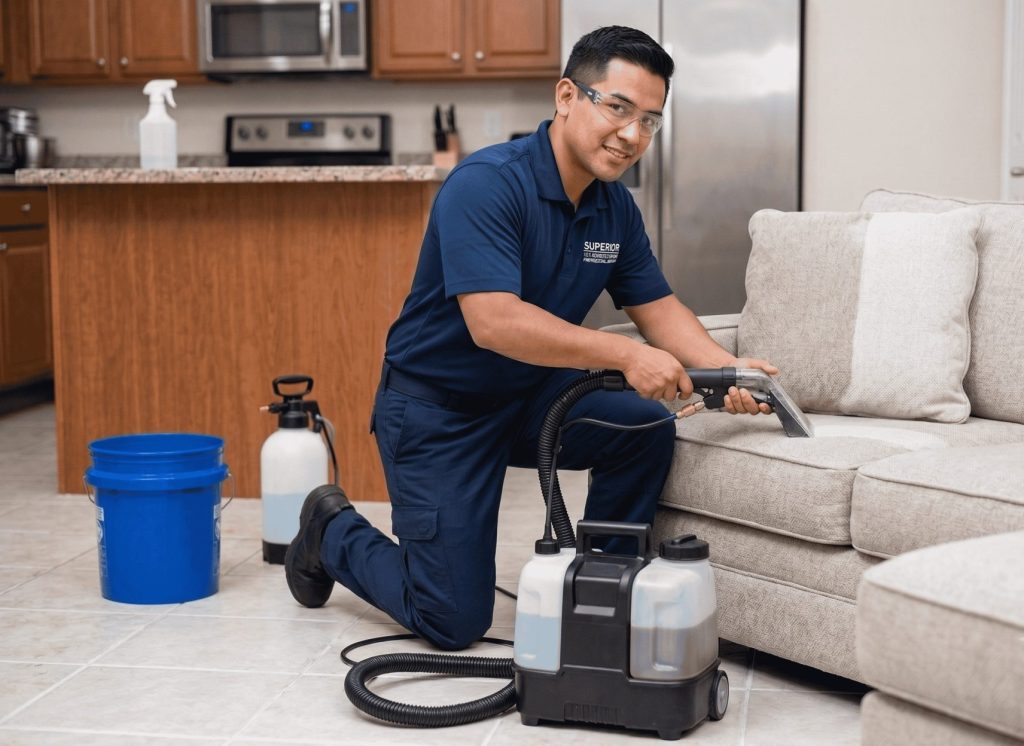
The couch your family gathers on every evening absorbs far more than spills. Upholstered furniture collects dust, pollen, pet dander, body oils, and moisture day after day, holding onto allergens deep in the cushions and fabric where surface wiping never reaches. At Dr. Carpet Clean, a family-owned and operated company serving Wilsonville and communities throughout the Willamette Valley and Portland metropolitan area for decades, our IICRC-certified technicians clean upholstered furniture thoroughly and dry it properly—restoring both its look and the freshness of your home.
With 70+ five-star reviews and BBB accreditation, we’ve earned the trust of homeowners across Clackamas County who want their furniture cleaned with genuine care.
Why Upholstered Furniture Needs Professional Attention
Upholstery is a porous, absorbent material, which makes it a natural reservoir for the same particles that settle into carpet and rugs. The National Center for Healthy Housing explains that dust mites thrive on mattresses, pillows, bedcovers, carpets, upholstered furniture, and other fabric items in the home, where dead skin cells and warmth give them everything they need.
Vacuuming the surface helps, but it doesn’t reach what’s embedded in the fibers and cushion filling. For Portland-area families with allergy sufferers or pets—in Tualatin, Sherwood, Canby, and Charbonneau—periodic professional cleaning meaningfully reduces the allergen load living in the furniture you use most.
The Moisture Factor in Oregon Homes
Cleaning upholstery is as much about how you dry it as how you clean it, and that’s especially true in Oregon’s damp climate. Because upholstered furniture absorbs and holds moisture, improper cleaning that leaves a piece over-saturated can invite mold—and the EPA is candid that fully drying upholstery is genuinely difficult.
According to the U.S. Environmental Protection Agency, when addressing moisture in upholstery, you should remove water with a water-extraction vacuum and accelerate drying with dehumidifiers, fans, and heaters. The agency cautions that completely drying upholstered furniture within 48 hours may be difficult, and if the piece is valuable, you may wish to consult a restoration or water-damage professional who specializes in furniture.
This is exactly why method matters. The broader EPA principle applies here: the key to mold control is moisture control, and it is important to dry water-damaged areas and items within 24 to 48 hours to prevent mold growth. Our process is built around strong extraction and rapid drying so your furniture never lingers damp.
The Dr. Carpet Clean Process for Furniture
Our family team adjusts our approach to each piece—fabric type, construction, and condition all shape the right method. When the EPA discusses choosing professionals for textile and furniture care, it specifically points homeowners to specialists in carpet and rug cleaning, water damage, and furniture restoration, and advises looking for those affiliated with professional organizations. Our technicians hold IICRC certification—the standard the EPA references for cleaning and restoration work. Here’s what to expect:
- Fabric assessment. We identify the upholstery type and test a hidden area for colorfastness before cleaning, so dyes don’t bleed.
- Gentle, thorough cleaning. We use methods matched to the fabric to lift embedded soil, allergens, oils, and odors from deep in the fibers—without over-wetting.
- Strong extraction and prompt drying. Following EPA guidance, we extract as much moisture as possible and accelerate drying so your furniture dries quickly and safely.
- Final walkthrough. We review the results with you so you can see and feel the difference.
We never saturate your furniture, never use harsh treatments that can damage delicate fabrics, and always give honest guidance about what a piece needs. That straightforward care is how a family business earns 70+ five-star reviews across the Portland metro.
When Furniture May Not Be Salvageable
Honesty matters most when a piece has been water-damaged or developed mold. The EPA notes that absorbent or porous materials may have to be thrown away if they become moldy, because mold can grow on or fill in the empty spaces and crevices of porous materials, making it difficult or impossible to remove completely. EPA
For furniture soiled by everyday use, professional cleaning is highly effective. For a piece soaked by contaminated water or left damp long enough to grow mold deep in the cushioning, we’ll give you a straight assessment of whether it can be safely restored—because your family’s health comes before any single job. As the EPA itself advises, for valuable or sentimental pieces it’s worth consulting a specialist rather than risking the item.
Serving Communities Throughout the Portland Metro
Dr. Carpet Clean proudly serves Wilsonville and the surrounding region, including the Charbonneau and Villebois neighborhoods, plus nearby Tualatin, Sherwood, Canby, Aurora, Donald, and Newberg, along with West Linn, Lake Oswego, and Tigard in the southern Portland metro, extending into the broader Willamette Valley. Wherever you are in our service area, your furniture gets the same certified, careful work.
Furniture cleaning pairs naturally with our other services. Since upholstery, carpet, and rugs all collect the same allergens, many customers combine furniture cleaning with our carpet cleaning and area rug cleaning services in a single visit. Addressing your home’s air duct cleaning at the same time tackles airborne particles at their source for a comprehensive refresh.
Frequently Asked Questions
How often should I have my upholstered furniture professionally cleaned?
For most Oregon homes, professional cleaning every 12 to 18 months keeps furniture fresh, with more frequent service for homes with pets, allergy sufferers, or heavily used pieces. Regular deep cleaning reaches the embedded allergens and oils that surface vacuuming leaves behind.
Will furniture cleaning help with allergies?
It can help reduce the allergen reservoir in your furniture. The National Center for Healthy Housing notes that dust mites accumulate in upholstered furniture and that such fabrics are harder to clean effectively than hard surfaces, so professional deep cleaning reaches what vacuuming misses.
Can you clean delicate or specialty fabrics?
Yes. Our IICRC-certified technicians identify each piece's fabric and test for colorfastness before cleaning, then match the method to what the material can safely tolerate. The EPA itself recommends consulting specialists for valuable pieces, which is the level of care we bring to every job.
My couch got wet—can it be saved?
It depends on the water and the timeframe. The EPA notes that completely drying upholstered furniture within 48 hours can be difficult, and that porous materials with mold may need to be discarded. A piece dampened by clean water and addressed quickly can often be restored. We'll give you an honest evaluation.
How long will my furniture take to dry?
We use strong extraction and accelerated drying to dry furniture as quickly as possible, working within the EPA's recommended window for preventing mold. Oregon's humidity and your home's ventilation affect timing, and we never return a piece to use while it's still damp.
Is Dr. Carpet Clean certified to clean furniture?
Yes. We're a family-owned, IICRC-certified, BBB-accredited company with 70+ five-star reviews and decades of service throughout the Portland metro and Willamette Valley. The EPA points homeowners to qualified cleaning and restoration specialists affiliated with professional organizations—exactly what our certification represents.
Refresh the furniture your family loves with the team Oregon trusts—Dr. Carpet Clean, proudly serving the Portland metro and Willamette Valley with 70+ five-star reviews, BBB accreditation, and IICRC-certified technicians.
Contact Dr. Carpet Clean in Wilsonville
Serving Wilsonville and the surrounding Willamette Valley, seven days a week, 6:00 AM to 8:30 PM.
Get a Free Quote