


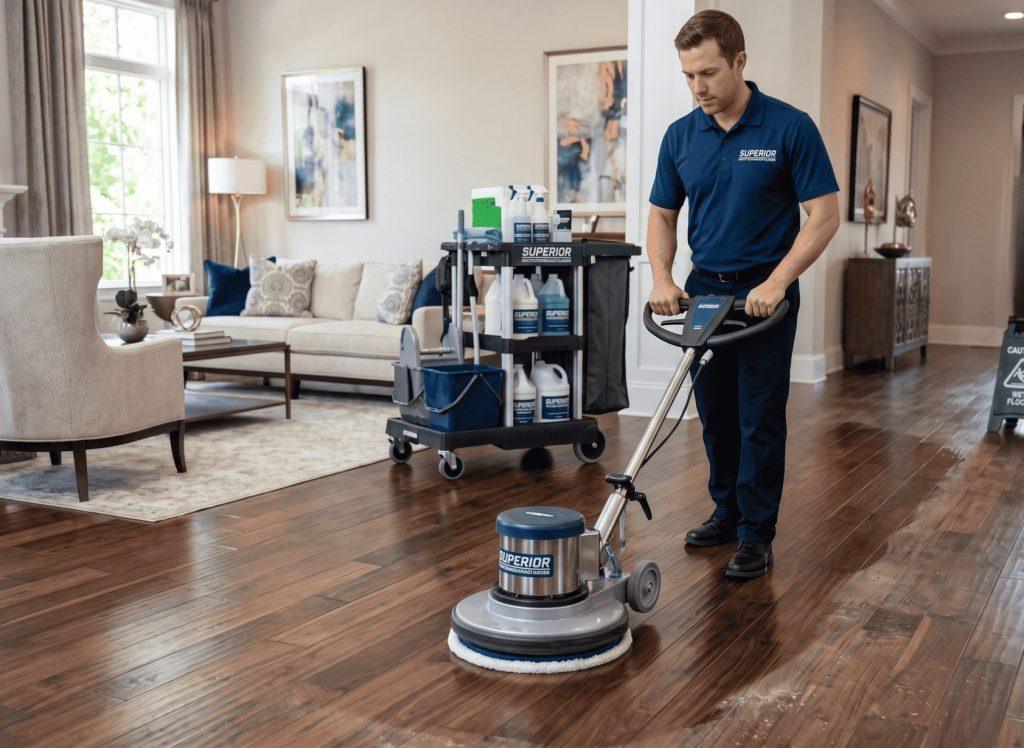
Hardwood floors bring warmth and lasting value to a home, but they’re also among the most moisture-sensitive surfaces you own. Too much water, the wrong cleaning method, or lingering dampness can dull a finish, lift a board, or invite mold underneath—turning a beautiful floor into a costly repair. At Dr. Carpet Clean, a family-owned and operated company serving Gresham and communities throughout the Willamette Valley and Portland metropolitan area for decades, our IICRC-certified technicians clean wood floors the careful way: enough to restore their beauty, never enough to harm them.
With 70+ five-star reviews and BBB accreditation, we’ve built our reputation across East Multnomah County on cleaning that respects how wood actually behaves.
Why Wood Floors Demand a Careful Approach
Wood is a natural material that responds to moisture, and that’s exactly why cleaning it is different from cleaning tile or carpet. Even government guidance on cleaning wood surfaces comes with a warning. According to the U.S. Environmental Protection Agency, when addressing moisture on wood, you should remove moisture immediately and use dehumidifiers, fans, and gentle heat to dry it—and the agency specifically cautions to be very careful when applying heat to hardwood floors.
For routine cleaning, the EPA’s approach is reassuringly gentle. The agency notes that treated or finished wood surfaces can be cleaned with mild detergent and clean water, then allowed to dry. The principle that matters most for Oregon homes is simple: clean lightly, and dry quickly. Over-wetting a wood floor is the single most common way well-meaning cleaning causes damage.
Oregon’s Climate and Your Wood Floors
Damp winters across the Portland metro—from East County through the broader Willamette Valley—keep indoor humidity a year-round consideration. Wood absorbs and releases moisture from the surrounding air, expanding and contracting with the seasons, and excess humidity is also what allows mold to grow on or beneath flooring.
The EPA is direct about the underlying issue: the key to mold control is moisture control, and it is important to dry water-damaged areas and items within 24 to 48 hours to prevent mold growth. The agency’s broader recommendation is to keep indoor relative humidity in a controlled range—ideally between 30 and 50 percent—which also helps protect the dimensional stability of wood flooring. For families in Troutdale, Fairview, Rockwood, and Happy Valley, managing humidity protects both your air quality and your investment in your floors. EPA
The Dr. Carpet Clean Process for Wood Floors
Our family team cleans wood floors with methods matched to their finish and condition—never a one-size-fits-all soak. When the EPA discusses choosing professionals for cleaning and restoration, it points homeowners to the guidelines of the Institute of Inspection, Cleaning and Restoration Certification (IICRC)—the certification our technicians hold. Here’s what to expect:
- Assessment. We evaluate your floor’s wood type, finish, and condition to determine the right cleaning approach.
- Gentle cleaning. Following the principle the EPA endorses for finished wood, we use appropriate cleaning solutions and controlled moisture—lifting built-up grime, foot traffic residue, and dulling film without saturating the wood.
- Prompt, thorough drying. We dry the floor quickly so no moisture lingers in seams or beneath boards, well within the safe window for preventing mold.
- Final walkthrough. We review the restored floor with you so you can see the difference.
We never flood your floors, never apply harsh treatments that can strip or cloud a finish, and always give you honest guidance on what your floor needs. That careful approach is how a family business earns 70+ five-star reviews across the Portland metro.
When Mold or Water Damage Is Involved
If your wood floor has suffered a leak or flood, honesty matters most. The EPA advises that mold should be scrubbed off hard surfaces with detergent and water, then dried completely. On the use of harsh chemicals, the agency is clear: the use of a chemical or biocide that kills mold, such as chlorine bleach, is not recommended as a routine practice during mold cleanup, and you should never mix bleach with cleaners containing ammonia, since toxic fumes could result. EPA
Solid wood that’s been surface-cleaned and dried can often be saved, but flooring left wet too long or affected by contaminated water may need professional remediation or replacement. We’ll always give you a straight assessment of what’s salvageable—because the right answer for your home comes before any single job.
Serving Communities Throughout the Portland Metro
Dr. Carpet Clean proudly serves Gresham and the surrounding region, including Troutdale, Fairview, Wood Village, Rockwood, Powell Valley, Hazelwood, and Pleasant Valley in East Multnomah County, along with nearby Happy Valley, Damascus, Boring, Sandy, and Corbett, and the broader Portland metro area extending into the Willamette Valley. Wherever you are in our service area, your floors get the same certified, careful work.
Wood floor cleaning pairs naturally with our other services. Many homes have both hardwood and soft surfaces, so customers often combine wood floor cleaning with carpet cleaning or tile and grout cleaning in a single visit. If you have rugs protecting your hardwood, our area rug cleaning service keeps those in top condition too.
Frequently Asked Questions
How often should I have my wood floors professionally cleaned?
For most Oregon homes, professional cleaning once or twice a year keeps floors looking their best, with more frequent service for high-traffic areas or homes with pets. Regular gentle cleaning removes the gritty soil that can scratch and dull a finish over time.
Will professional cleaning damage my wood floors?
Not when done correctly—the key is controlled moisture and prompt drying. The EPA's own guidance for finished wood is to clean with mild detergent and water, then allow it to dry, and to be especially careful with heat on hardwood. Our process follows that principle precisely, avoiding the over-wetting that causes most cleaning-related damage.
Why do my wood floors seem to gap or creak more in certain seasons?
Wood naturally expands and contracts as it absorbs and releases moisture from the surrounding air, so Oregon's seasonal humidity swings can affect how floors feel. Keeping indoor humidity in the EPA-recommended 30-to-50-percent range helps minimize this movement and protects your flooring.
Can you clean mold off my wood floor?
For solid, finished wood with surface mold, the EPA recommends scrubbing with detergent and water and drying completely, and we follow that approach. However, if water has penetrated deeply or the floor was wet for an extended period, professional remediation or replacement may be necessary. We'll honestly assess your specific situation.
Should I use bleach to clean mold off my floors?
The EPA does not recommend chlorine bleach as a routine practice for mold cleanup, and warns never to mix bleach with ammonia-based cleaners due to toxic fumes. We use methods aligned with EPA guidance rather than harsh chemicals.
Is Dr. Carpet Clean certified to clean wood floors?
Yes. We're a family-owned, IICRC-certified, BBB-accredited company with 70+ five-star reviews and decades of service throughout the Portland metro and Willamette Valley. The EPA itself points homeowners to IICRC guidelines for cleaning and restoration work.
Restore the beauty of your hardwood with the family team Oregon trusts—Dr. Carpet Clean, proudly serving the Portland metro and Willamette Valley with 70+ five-star reviews, BBB accreditation, and IICRC-certified technicians.
Contact Dr. Carpet Clean in Gresham
Serving Gresham and the surrounding Willamette Valley, seven days a week, 6:00 AM to 8:30 PM.
Get a Free Quote