

Your clothes dryer works hard to dry laundry for your Albany family, but hidden inside your walls and ceilings, lint accumulates in the dryer vent system, creating a serious fire hazard. According to the U.S. Fire Administration, approximately 2,900 home clothes dryer fires are reported each year, causing an estimated 5 deaths, 100 injuries, and $35 million in property damage. The National Fire Protection Association (NFPA) reports that failure to clean was the leading factor contributing to clothes dryer fires, cited in 33% of incidents. Dr. Carpet Clean provides professional dryer vent cleaning services to Albany and throughout Linn County, protecting your family and home from this preventable fire hazard. As a family-owned and operated business with BBB accreditation and raving 5-star customer reviews, we provide the reliable, safety-focused service Albany homeowners have trusted for decades.


The Critical Importance of Dryer Vent Cleaning
Many Albany homeowners don’t realize the serious fire risk posed by clogged dryer vents. Every time you dry a load of laundry, lint escapes the lint trap and accumulates in your dryer vent system. Over months and years, this buildup restricts airflow, causes overheating, and creates ideal conditions for dryer fires.
Alarming Dryer Fire Statistics
The National Fire Protection Association provides sobering statistics about dryer fires:
- From 2014-2018, U.S. fire departments responded to an estimated average of 13,820 home structure fires involving clothes dryers annually
- These fires resulted in an average of 13 civilian deaths, 440 civilian injuries, and $233 million in direct property damage per year
- Dryers accounted for 92% of fires involving clothes dryers or washing machines
- The leading factor contributing to ignition in dryer fires was failure to clean, cited in 33% of incidents
- Dust, fiber, or lint was the leading item first ignited in clothes dryer fires at 27%
For Albany’s approximately 56,773 residents, professional dryer vent cleaning is essential fire prevention that protects families and homes.
How Lint Buildup Causes Fires
The U.S. Fire Administration explains that lint is highly combustible and accumulates in dryer vents over time. When airflow becomes restricted, the dryer overheats. Combine excessive heat with flammable lint, and fire conditions are created. This is why 34% of all dryer fires stem from lint buildup in vents according to NFPA data—these fires are entirely preventable through regular professional cleaning.
Understanding Albany’s Dryer Vent Cleaning Needs
Albany, Oregon, with its population of approximately 57,997 and 19,705 households, is home to thousands of clothes dryers requiring regular vent maintenance. As the 11th most populous city in Oregon and county seat of Linn County, Albany’s diverse housing stock includes single-family homes, apartments, manufactured homes, and multi-family buildings—all requiring professional dryer vent cleaning to prevent fires.
Albany’s Climate and Dryer Usage Patterns
According to climate data, Albany has cool, wet winters with December receiving 6.8 inches of precipitation as the wettest month. The U.S. Fire Administration notes that dryer fire incidence peaks in fall and winter months, with January showing 10.6% of annual dryer fires. Higher dryer usage during Albany’s wet winter months, combined with increased indoor humidity, makes professional vent cleaning even more critical.
Home Values and Investment Protection
With Albany’s median household income of $73,809, homeowners invest significantly in their properties. Professional dryer vent cleaning protects this investment by preventing fires that cause devastating property damage and ensuring dryer efficiency that saves energy costs.
Our Professional Dryer Vent Cleaning Process
Dr. Carpet Clean follows industry best practices and fire safety guidelines to deliver thorough dryer vent cleaning that genuinely reduces fire risk:
Step 1: Comprehensive Inspection and Assessment
We begin every service with thorough inspection:
- Disconnect dryer and pull away from wall to access vent connection
- Inspect vent connection point for damage, disconnection, or improper installation
- Assess vent material type (rigid metal, flexible metal, or problematic plastic/foil)
- Measure total vent run length and count bends/turns
- Check exterior vent hood for blockages, damage, or missing flapper
- Evaluate lint accumulation severity
- Identify any code violations or safety concerns
Step 2: Powerful Vacuum and Brush Cleaning
Using professional equipment specifically designed for dryer vent cleaning, we thoroughly remove all lint accumulation:
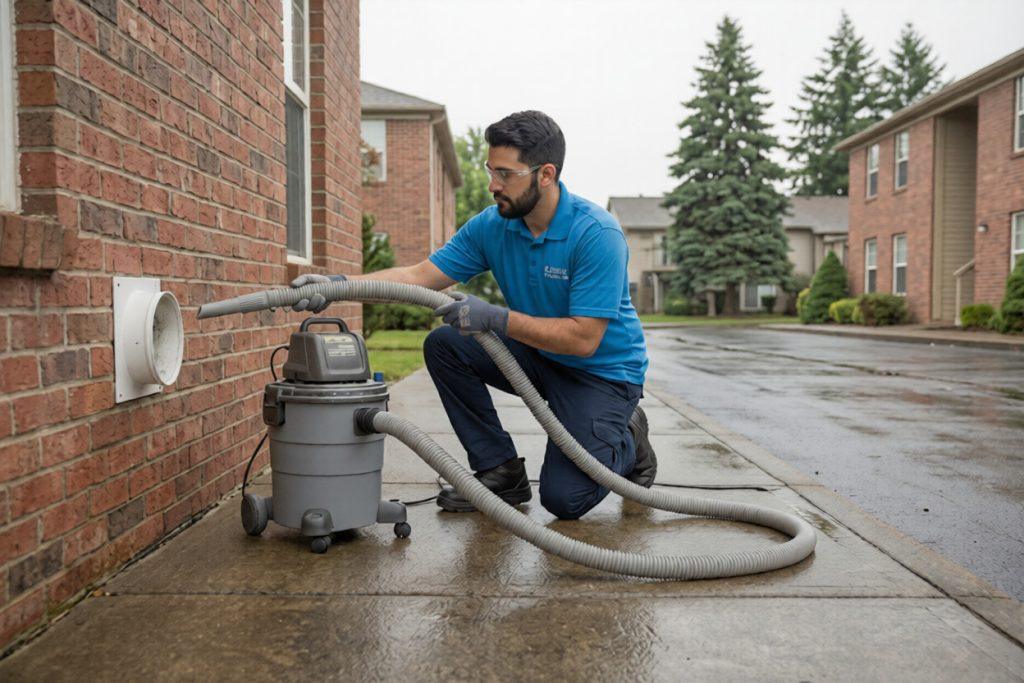
- Connect high-powered vacuum to exterior vent opening to create negative pressure
- Insert rotating brush system through vent line to dislodge stuck-on lint
- Work from both interior and exterior access points for complete cleaning
- Clean entire vent run from dryer connection to exterior termination
- Remove lint from dryer interior cavity and surrounding areas
- Clean exterior vent hood and ensure proper flapper operation
Step 3: Airflow Testing and Verification
After cleaning, we verify proper system function:
- Reconnect dryer and test operation
- Verify strong airflow at exterior vent
- Check for proper venting and no restrictions
- Ensure vent hood flapper opens fully during operation
- Confirm dryer operates efficiently without overheating
Step 4: Safety Recommendations and Documentation
We provide comprehensive reporting:
- Document before-and-after vent condition with photos
- Note amount of lint removed
- Identify any vent system deficiencies or code violations
- Recommend repairs or vent system improvements if needed
- Provide guidance on cleaning frequency based on usage
Serving Albany and All Surrounding Communities
Dr. Carpet Clean proudly serves homeowners and property managers throughout Albany and all surrounding Linn County and Benton County communities. As a locally-based, family-owned company with multiple locations serving the Willamette Valley and Portland communities, we provide prompt, reliable dryer vent cleaning throughout the region.
Communities We Serve:
- Albany, Oregon – Our primary service area where we protect thousands of homes from dryer fire hazards.
- Corvallis, Oregon – Just west of Albany, Corvallis residents trust our dryer vent cleaning expertise.
- Lebanon, Oregon – East of Albany on Highway 20, Lebanon homeowners choose our fire prevention services.
- Sweet Home, Oregon – Further east in Linn County, protecting homes from dryer fires.
- Tangent, Oregon – North of Albany, comprehensive dryer vent cleaning services.
- Millersburg, Oregon – This growing community receives professional vent cleaning.
- Jefferson, Oregon – North toward Marion County, fire prevention services.
- Brownsville, Oregon – South in Linn County, dryer vent safety services.
- Halsey, Oregon – Professional dryer vent cleaning and inspection.
- Harrisburg, Oregon – Southwest of Albany, protecting homes from fire hazards.
- Scio, Oregon – East of Albany, comprehensive vent cleaning services.
- Philomath, Oregon – West near Corvallis, professional dryer vent maintenance.
- Salem, Oregon – We extend our services north to Oregon’s capital city.
Throughout Linn County’s 131,984 residents, homeowners choose Dr. Carpet Clean for dryer vent cleaning that genuinely prevents fires and protects families.
Warning Signs Your Dryer Vent Needs Cleaning
The NFPA and fire safety experts recommend professional dryer vent cleaning annually, but certain warning signs indicate your Albany home needs immediate service:
Performance Issues
- Clothes Taking Longer to Dry: A full cycle no longer dries clothes completely, requiring multiple cycles
- Clothes Hotter Than Normal: Laundry comes out extremely hot to the touch after drying
- Dryer Exterior Hot: Dryer cabinet feels very hot during operation
- Burning Smell: Musty or burning odor when dryer operates
- Lint Around Dryer Door: Excessive lint accumulation around door seal or on clothing
Vent System Warning Signs
- No Exterior Airflow: Little or no air coming from exterior vent hood when dryer runs
- Lint Around Exterior Vent: Lint visible around outdoor vent opening
- Vent Hood Flapper Not Opening: Exterior vent flapper stays closed or barely opens during operation
- Humidity in Laundry Room: Excessive moisture or condensation when dryer operates
- Debris or Nests: Birds’ nests, rodent nests, or debris blocking exterior vent
Safety Red Flags
- Dryer Shuts Off: Thermal safety switches trip, causing dryer to stop mid-cycle
- Error Codes: Newer dryers display vent blockage warning codes
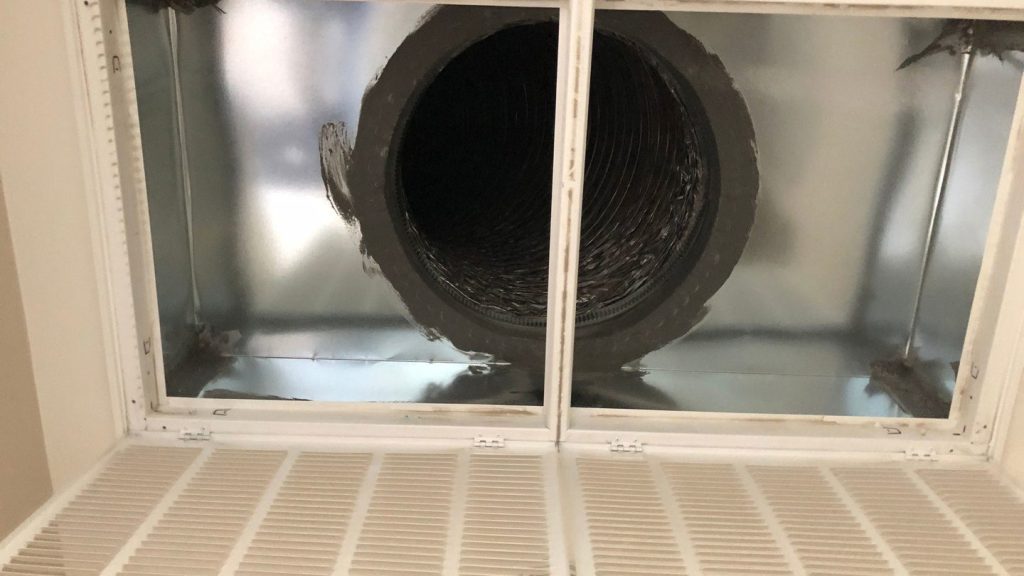
- Visible Lint in Vent: Looking inside vent connection shows heavy lint accumulation
- More Than One Year: It’s been over a year since last professional cleaning
If you notice any of these warning signs in your Albany home, schedule professional dryer vent cleaning immediately to prevent fire risk.
The Hidden Dangers of Clogged Dryer Vents
Beyond the obvious fire hazard, clogged dryer vents create multiple problems for Albany homeowners:
Fire Hazard
The U.S. Fire Administration reports that clothes dryer fires most often started in laundry areas (83%), with dust, fiber, or lint being the leading item first ignited. When vents are clogged, heat cannot escape, temperatures rise dramatically, and lint ignites—creating fires that spread rapidly through vent systems and into walls.
Carbon Monoxide Risk (Gas Dryers)
For homes with gas dryers, clogged vents can cause carbon monoxide to back up into living spaces. This odorless, colorless gas is deadly and requires properly functioning vents to safely exhaust outdoors.
Dramatically Increased Energy Costs
When vents are clogged, dryers work harder and run longer to dry clothes. This substantially increases energy consumption. The U.S. Department of Energy reports that dryers with clean vents can reduce drying times by up to 30%, translating directly to lower utility bills for Albany families.
Premature Dryer Failure
Overheating caused by restricted vents damages dryer components including heating elements, thermostats, cycling thermostats, and motors. Replacing a dryer costs hundreds to over a thousand dollars—far more than regular professional vent cleaning.
Mold and Mildew Growth
When moist air cannot properly exhaust, humidity accumulates in laundry rooms and surrounding areas, promoting mold and mildew growth in walls, ceilings, and on surfaces.
Shortened Clothing Life
Extended drying times and excessive heat damage fabrics, causing colors to fade, elastic to deteriorate, and fibers to break down faster than normal.
How Often Should Dryer Vents Be Cleaned?
Fire safety organizations including the NFPA and U.S. Fire Administration recommend professional dryer vent cleaning at least annually. However, certain factors necessitate more frequent cleaning:
Annual Cleaning Recommended For:
- Typical households doing 4-5 loads of laundry weekly
- Dryers with relatively short, straight vent runs (under 15 feet)
- Homes with rigid metal venting material
- Single-family residences with standard usage
Semi-Annual or Quarterly Cleaning For:
- Large Families: Households doing 7+ loads weekly generate substantially more lint
- Long Vent Runs: Vents longer than 25 feet or with multiple bends accumulate lint faster
- Pet Owners: Pet hair creates additional lint that clogs vents more quickly
- Multi-Family Buildings: Apartment dryers with shared or long vent runs
- Flexible Metal Venting: Corrugated interior surfaces catch more lint
- Older Dryers: Less efficient lint filters allow more escape into vents
Special Circumstances:
- New Home Purchase: Have vents cleaned before moving in
- Rental Properties: Clean before each new tenant occupancy
- After Extended Vacancy: Birds, rodents may have nested in vents
- Performance Issues: Any time warning signs appear
Common Dryer Vent Problems We Fix
Beyond cleaning, we identify and address dryer vent system deficiencies that create fire hazards:
Improper Vent Materials
Many older Albany homes have plastic or foil accordion-style dryer vents—both serious fire hazards. The NFPA recommends rigid or flexible metal venting. We identify improper materials and recommend replacement with code-compliant metal venting.
Disconnected or Damaged Vents
Vibration can disconnect vent joints, causing hot, moist air to exhaust into walls, attics, or living spaces. We identify disconnections and ensure secure, proper connections throughout the vent run.
Crushed or Restricted Vents
Flexible vents can become crushed when dryers are pushed too close to walls. We identify restrictions and recommend solutions to ensure proper airflow.
Improper Termination
Vents terminating in attics, crawl spaces, or garages create moisture problems and fire hazards. We identify improper terminations and recommend proper exterior venting.
Missing or Damaged Vent Hoods
Exterior vent hoods with broken flappers or missing entirely allow pests to enter and outdoor air to infiltrate. We identify these issues and recommend proper vent hood installation.
Excessive Vent Length
Building codes limit dryer vent length based on number of elbows. Excessively long vents create fire hazards and inefficient drying. We measure vent runs and advise if modifications are necessary.
Why Choose Dr. Carpet Clean for Dryer Vent Cleaning
Fire Prevention Expertise
We understand the serious fire hazard posed by clogged dryer vents and take thorough cleaning seriously. Our technicians are trained in fire prevention best practices and follow NFPA guidelines for dryer vent maintenance.
Proper Equipment and Training
We use professional-grade rotating brush systems and powerful vacuums specifically designed for dryer vent cleaning. Our equipment reaches the entire vent length and removes all accumulated lint—not just what’s visible at connections.
BBB Accreditation and 5-Star Reviews
Our Better Business Bureau accreditation and consistently high customer reviews reflect our commitment to quality service. Albany homeowners trust us because we deliver thorough cleaning that genuinely prevents fires.
Family-Owned and Operated for Decades
As a family-owned business serving Oregon communities for decades, we treat every home as if it were our own. We’re local to the community and care about protecting Albany families from preventable fire hazards.
Comprehensive Service
We don’t just blow lint around—we remove it completely. We clean the entire vent system from dryer connection to exterior termination, identify problems, and provide honest recommendations for repairs or improvements.
Multiple Locations Serving Your Community
With convenient locations throughout the Willamette Valley and Portland communities, we provide reliable, consistent service backed by decades of experience in Oregon.
Dryer Vent Cleaning for Multi-Family Properties
Property managers and landlords in Albany trust Dr. Carpet Clean for dryer vent cleaning in apartment buildings, condominiums, and multi-family properties. With Albany’s 19,705 households including substantial multi-family housing, professional dryer vent maintenance is essential for property safety and liability protection.
Multi-Family Dryer Vent Challenges
- Longer vent runs through multiple floors
- Shared vent systems serving multiple units
- Limited access to vent routing
- Higher usage frequency from multiple tenants
- Greater fire risk affecting multiple families
Our Multi-Family Services
- Scheduled maintenance programs for entire properties
- Coordination with property management schedules
- Individual unit vent cleaning
- Common area laundry facility maintenance
- Documentation for insurance and liability purposes
- Recommendations for vent system improvements
DIY Dryer Vent Maintenance
While professional annual cleaning is essential, Albany homeowners can take important maintenance steps between professional services:
After Every Load:
- Clean lint screen/filter completely
- Check for lint around dryer door seal
- Ensure lint screen is properly installed
Monthly:
- Vacuum lint from screen cavity using crevice tool
- Check exterior vent while dryer operates to verify airflow
- Remove lint or debris from exterior vent hood
- Check that vent hood flapper opens fully during operation
What Homeowners Cannot Do:
While basic maintenance helps, homeowners cannot achieve the thorough cleaning that professional equipment provides. Standard vacuum cleaners cannot reach through entire vent runs, and without proper brushing equipment, stuck-on lint remains in vents. The NFPA’s finding that failure to clean contributes to 33% of dryer fires underscores the importance of professional service.
Seasonal Considerations for Albany Homeowners
Albany’s climate creates seasonal dryer vent challenges:
Fall and Winter
The U.S. Fire Administration data shows dryer fire incidence peaks in fall and winter. With Albany’s wettest month being December at 6.8 inches, increased dryer usage during wet weather creates more lint accumulation. Schedule professional cleaning in early fall before peak usage months.
Spring
Spring is ideal for dryer vent inspection and cleaning, addressing any winter accumulation before summer. Check exterior vents for bird nests—spring nesting season often sees birds blocking vent hoods.
Summer
While dryer usage may decrease during warm, dry months, summer is excellent for addressing any vent system modifications or repairs requiring exterior work.
Understanding Different Dryer Types and Vent Requirements
Different dryer types have unique venting requirements and fire risk profiles that Albany homeowners should understand:
Electric Dryers vs. Gas Dryers
The National Fire Protection Association reports that electric dryers are shown to be more than 2.5 times more likely than gas dryers to cause fires. This increased risk stems from higher heat discharge from electric dryers, which intensifies lint buildup problems. Electric dryers operate at higher temperatures that more readily ignite accumulated lint when vents become restricted.
Gas dryers pose additional risks beyond fire. When vents are clogged, combustion gases including carbon monoxide cannot properly exhaust and may back up into living spaces. This invisible, odorless gas is deadly, making proper vent function absolutely critical for gas dryer safety.
Standard Vented Dryers
Traditional vented dryers exhaust hot, moist air through ductwork to the exterior. These are the most common type in Albany homes and require regular professional vent cleaning to prevent lint accumulation and maintain safe operation.
Condensing Dryers
Condensing dryers collect moisture in a reservoir rather than venting outdoors. While these don’t have traditional lint-filled exhaust vents, they still have lint filters requiring regular cleaning and internal components that benefit from professional maintenance.
Heat Pump Dryers
Heat pump dryers recirculate air and extract moisture through condensation. Like condensing dryers, they don’t vent outdoors but still require lint management and periodic professional servicing to maintain efficiency and safety.
Commercial Dryer Vent Cleaning Services in Albany
Beyond residential service, Dr. Carpet Clean serves Albany’s commercial sector. With 26,100 employees working in various sectors throughout the city, many businesses rely on commercial dryers requiring professional vent maintenance.
Industries We Serve:
- Laundromats and Coin Laundries: High-volume dryer usage requires frequent vent cleaning—often quarterly or monthly depending on traffic
- Hotels and Motels: Daily linen and towel processing creates substantial lint accumulation
- Medical Facilities: Hospitals, clinics, and care facilities with on-site laundries need reliable vent maintenance
- Restaurants: Establishments washing linens, aprons, and kitchen textiles on-site
- Fitness Centers: Gyms and health clubs processing towels and workout clothing
- Salons and Spas: Businesses washing towels, robes, and linens continuously
- Property Management Companies: Managing multi-family buildings with common laundry facilities
- Industrial Facilities: Manufacturing operations with uniform or textile processing needs
Commercial Dryer Vent Challenges
Commercial dryers present unique challenges requiring professional expertise:
- Much longer vent runs, often 50-100+ feet through multiple floors or across buildings
- Higher volume usage creating rapid lint accumulation
- Multiple dryers sharing common vent systems
- Complex vent routing through mechanical spaces and around structural elements
- Greater fire risk affecting business operations and public safety
- Liability concerns requiring documented maintenance
- Code compliance and inspection requirements
Our Commercial Service Approach
- Scheduled maintenance programs tailored to usage levels
- After-hours service to minimize business disruption
- Documentation for insurance and fire marshal inspections
- Compliance verification with building codes and fire codes
- Emergency service for sudden vent failures
- Preventive maintenance recommendations
The Science Behind Dryer Vent Fires
Understanding how dryer vent fires develop helps Albany homeowners appreciate the critical importance of professional cleaning:
The Fire Triangle
Fire requires three elements: heat, fuel, and oxygen. Dryer vents provide all three in abundance. The dryer produces intense heat (up to 200°F), lint provides highly combustible fuel, and airflow supplies oxygen. When vents become clogged, heat cannot dissipate, temperatures rise beyond safe levels, and lint ignites.
Lint as a Fire Accelerant
Lint is essentially cotton, polyester, and other fabric fibers compressed into fluffy material with enormous surface area relative to mass. This high surface-to-mass ratio makes lint extremely flammable—similar to wood shavings or paper. Once ignited, lint burns rapidly and at high temperatures.
Heat Buildup in Restricted Vents
When vents become partially blocked, airflow decreases substantially. The dryer’s heating element continues producing heat, but without adequate airflow to carry heat away, temperatures inside the dryer and vent system climb dramatically. Modern dryers have thermal fuses and high-limit thermostats designed to shut off heating when temperatures exceed safe levels, but these safety devices can fail or may activate too late to prevent ignition.
Ignition Points
The U.S. Fire Administration data shows that 83% of dryer fires originated in laundry areas, with dust, fiber, or lint being the leading material first ignited. Fires typically start at one of several points: lint accumulated on heating elements, lint packed in the drum’s lint cavity, lint built up at vent connections where heat concentrates, or lint throughout vent runs when heat cannot dissipate.
Fire Spread Through Vent Systems
Once lint ignites in a dryer or vent, fire spreads rapidly through the vent system. Vents running through walls, floors, and ceilings provide pathways for fire to reach structural elements and spread to other areas of the home—often before occupants realize there’s a problem. This rapid spread potential makes dryer fires particularly dangerous.
The Financial Impact: Cost Savings and ROI of Professional Cleaning
For Albany homeowners, professional dryer vent cleaning delivers substantial financial returns beyond fire prevention:
Energy Cost Savings
When dryer vents are clogged, drying cycles extend dramatically. The U.S. Department of Energy reports that clean dryer vents can reduce drying times by up to 30%. For Albany families doing 5-7 loads weekly, this represents significant annual energy savings:
- Typical electric dryer uses 2-5 kWh per load
- Clogged vents may require 2-3 cycles instead of one, tripling energy use
- At Albany’s average electricity rates, this waste costs $50-150+ annually
- Annual professional cleaning ($100-200) pays for itself in energy savings alone
Appliance Longevity
Dryers forced to run longer cycles and operate at higher temperatures experience accelerated wear on critical components including heating elements ($100-300 to replace), thermostats and cycling thermostats ($50-150 each), motors ($200-400 to replace), and drum belts and rollers ($100-200). Replacing a failed dryer costs $400-1,500+. Professional vent cleaning extends dryer life by years, avoiding these expensive repairs and premature replacement.
Clothing Preservation
Extended drying times and excessive heat damage fabrics, causing colors to fade faster, elastic to deteriorate more quickly, and fibers to break down prematurely. Replacing clothing and linens due to dryer damage costs hundreds annually for typical families. Proper vent maintenance preserves clothing investment.
Time Savings
When dryers operate efficiently, laundry takes less time. For busy Albany families, reducing laundry time from hours to minutes weekly represents valuable time savings for other activities.
Insurance and Property Value Protection
The NFPA reports $233 million in average annual property damage from dryer fires. Beyond the devastating personal loss, dryer fires affect insurance premiums, property values, and insurability. Professional vent cleaning protects your investment in your Albany home.
Building Codes and Fire Safety Regulations
Oregon building codes and fire codes incorporate requirements for dryer vent installations and maintenance that Albany homeowners should understand:
International Residential Code Requirements
Most Oregon jurisdictions adopt the International Residential Code (IRC) which specifies dryer vent requirements including maximum vent length (typically 25 feet for 4-inch diameter vents), deductions for elbows (2.5 feet for 90-degree elbows, 5 feet for two 45-degree elbows), required vent materials (rigid or semi-rigid metal), and prohibition of screen terminations that trap lint.
Material Requirements
Building codes prohibit plastic or foil dryer vents due to fire hazards. Only rigid metal or flexible metal vents are code-compliant. Many older Albany homes still have non-compliant venting that should be replaced during vent cleaning services.
Proper Termination
Codes require dryer vents to terminate outdoors through the building envelope—not in attics, crawl spaces, garages, or any interior space. Improper termination creates moisture problems, potential carbon monoxide hazards (gas dryers), and code violations.
Maintenance Requirements
Fire codes including the International Fire Code (IFC) and NFPA Fire Code (NFPA 1) require dryer vent systems to be maintained in accordance with manufacturer’s instructions to prevent lint accumulation. Professional annual cleaning helps ensure code compliance.
Insurance and Liability Considerations
Professional dryer vent cleaning carries important insurance and liability implications for Albany homeowners and landlords:
Homeowner’s Insurance
While most homeowner’s policies cover dryer fires, failure to maintain the dryer and vent system could impact claims. Insurance companies may investigate whether negligent maintenance contributed to fires. Documented professional vent cleaning demonstrates responsible home maintenance that protects insurance coverage.
Landlord Liability
Landlords providing dryers in rental properties have legal duty to maintain safe conditions. Given that the NFPA identifies failure to clean as contributing to 33% of dryer fires, landlords failing to provide regular vent cleaning could face liability for fire damage or injuries. Professional cleaning with documentation provides liability protection.
Multi-Family Property Management
Property managers operating apartment buildings or condominiums with common laundry facilities face even greater liability exposure. Fires in common areas can affect multiple units and residents. Professional vent maintenance programs with thorough documentation are essential risk management.
Commercial Business Liability
Businesses operating dryers face liability for fire damage to property, injuries to customers or employees, and business interruption losses. Given the U.S. Fire Administration’s data on dryer fire frequency and severity, professional maintenance is critical liability protection.
Professional vs. DIY Dryer Vent Cleaning: The Real Comparison
Many Albany homeowners consider DIY dryer vent cleaning to save money. Understanding the real differences helps make informed decisions:
What DIY Methods Cannot Accomplish
Standard vacuum cleaners cannot reach more than 6-8 feet into vent runs, while typical Albany homes have 15-25+ foot runs. Without rotating brush equipment, stuck-on lint remains adhered to vent walls—vacuuming alone removes only loose lint. Household tools cannot access elbows and turns where lint accumulates most heavily. DIY methods cannot identify vent system problems, code violations, or safety hazards.
Professional Equipment Advantages
Professional dryer vent cleaning equipment includes high-powered negative air machines creating suction throughout entire vent runs, rotating brush systems that mechanically dislodge stuck-on lint, sectional rods reaching 50+ feet through vent systems, cameras for visual inspection of vent interiors, and airflow measurement tools for performance verification.
Safety Considerations
Professional technicians know how to safely disconnect dryers, identify gas line issues (gas dryers), recognize electrical hazards, work safely with exterior access requirements, and identify structural or building envelope concerns. DIY attempts can create safety hazards if performed incorrectly.
Effectiveness Comparison
The NFPA’s finding that failure to clean contributes to 33% of dryer fires demonstrates that current cleaning practices—whether DIY or no cleaning—are inadequate for many homeowners. Professional service ensures thorough cleaning that genuinely prevents fires.
Long-Term Dryer Maintenance Beyond Vent Cleaning
While vent cleaning is critical, comprehensive dryer maintenance includes additional care that extends appliance life and maintains safety:
Lint Screen Maintenance
Beyond wiping lint off after each load, lint screens require periodic deep cleaning. Fabric softener sheets and liquid fabric softeners create waxy buildup on screen mesh that reduces airflow even when screens appear clean. Monthly washing with warm soapy water and a soft brush removes this invisible buildup.
Interior Drum Cavity Cleaning
Lint accumulates in the drum cavity beneath the lint screen. This area should be vacuumed monthly using a crevice tool to prevent lint from bypassing the screen and entering vent systems.
Door Seal Inspection
Worn or damaged door seals allow heat to escape, reducing efficiency and potentially creating fire hazards if lint accumulates near heating elements. Annual inspection and replacement when worn maintains safe operation.
Drum Belt and Roller Maintenance
Worn belts and rollers cause excessive noise, vibration, and can damage clothing. Professional inspection identifies wear before failure, preventing emergency breakdowns.
Electrical Connection Inspection
The NFPA reports that electrical failure or malfunction contributed to 16% of dryer fires. Periodic inspection of power cords, connections, and outlets identifies hazards before they cause fires.
Proper Dryer Use Practices
Following manufacturer guidelines maximizes safety including not overloading the dryer, avoiding drying items with flammable substance contamination (gasoline, cooking oils, grease), removing items promptly after cycles complete, and never running dryers while away from home or sleeping.
Frequently Asked Questions About Dryer Vent Cleaning in Albany, Oregon
How often should I have my dryer vent professionally cleaned?
The National Fire Protection Association and U.S. Fire Administration recommend professional dryer vent cleaning at least annually. However, large families, pet owners, long vent runs, or multi-family buildings may need cleaning every 6 months. If you notice clothes taking longer to dry, burning smells, or excessive lint, schedule cleaning immediately regardless of when last serviced.
How much does dryer vent cleaning cost in Albany?
Costs vary based on vent length, accessibility, and severity of buildup. Most single-family homes range from $100-$200 for standard service. Complex installations, extremely long runs, or severely clogged vents may cost more. We provide transparent, upfront pricing with no hidden fees. Given that dryer fires cause an average of $233 million in property damage annually according to NFPA data, professional cleaning is an inexpensive fire prevention investment.
Can I clean my own dryer vent?
While you should clean the lint screen after every load and can vacuum the lint cavity monthly, thorough vent cleaning requires professional equipment. Standard vacuum cleaners cannot reach through 10-25 foot vent runs, and without rotating brush systems, stuck-on lint remains adhered to vent walls. The NFPA finding that 33% of dryer fires result from failure to clean underscores why professional service is essential for fire prevention.
How long does professional dryer vent cleaning take?
Most residential dryer vent cleaning takes 45 minutes to 1.5 hours depending on vent length, accessibility, number of elbows, and accumulation severity. We work efficiently while ensuring thorough cleaning of the entire vent system from dryer connection to exterior termination.
Will cleaning my dryer vent lower my energy bills?
Yes! When vents are clogged, dryers work harder and run longer to dry clothes, substantially increasing energy consumption. The U.S. Department of Energy reports that clean dryer vents can reduce drying times by up to 30%. For Albany families doing 5-7 loads weekly, this translates to significant annual energy savings.
What are signs my dryer vent is clogged?
Warning signs include clothes taking longer to dry (requiring multiple cycles), clothes extremely hot after drying, burning smell when dryer operates, excessive lint around dryer door, no air coming from exterior vent, dryer exterior very hot during use, and dryer shutting off mid-cycle. Any of these symptoms indicate your Albany home needs immediate professional vent cleaning to prevent fire risk.
Can a clogged dryer vent cause a fire even if I clean the lint screen?
Yes. While cleaning the lint screen after every load is essential, it doesn't capture all lint. According to the NFPA, 27% of dryer fires started with dust, fiber, or lint as the first item ignited—and this lint accumulates in the vent system beyond the lint screen. The U.S. Fire Administration reports approximately 2,900 home dryer fires annually despite most people cleaning lint screens, proving that professional vent cleaning is necessary for fire prevention.
Is dryer vent cleaning really necessary if my dryer seems to work fine?
Absolutely. Many Albany homes have partially clogged vents that haven't yet caused obvious performance problems but still pose serious fire hazards. The National Fire Protection Association reports that failure to clean was the leading factor in 33% of dryer fires. By the time performance issues appear, lint accumulation is severe and fire risk is substantial. Annual professional cleaning prevents problems before they develop into emergencies.
Schedule Your Albany Dryer Vent Cleaning Today
Don’t wait for warning signs to protect your Albany home and family from dryer fires. With the National Fire Protection Association reporting approximately 13,820 home dryer fires annually causing an average of 13 deaths, 440 injuries, and $233 million in property damage, professional dryer vent cleaning is critical fire prevention that every homeowner needs.
Dr. Carpet Clean has served Oregon communities for decades with honesty, integrity, and professional expertise. With BBB accreditation and consistently high customer reviews, we’re the dryer vent cleaning service Albany homeowners trust to genuinely prevent fires and protect families.
We serve Albany and all surrounding communities including Corvallis, Lebanon, Sweet Home, Tangent, Millersburg, and throughout Linn County. With multiple locations serving the Willamette Valley and Portland communities, we provide the reliable, professional service you deserve.
Our raving 5-star reviews reflect our commitment to thorough service that delivers real fire prevention. As a family-owned business local to the community, we treat every home as if it were our own, providing comprehensive dryer vent cleaning that removes all lint accumulation and identifies any safety concerns.
Don’t become a statistic. The U.S. Fire Administration reports that 34% of dryer fires stem from lint buildup in vents—fires that are entirely preventable through regular professional cleaning. Contact Dr. Carpet Clean today to schedule your dryer vent cleaning and protect your Albany home from this serious yet preventable fire hazard.
Contact Dr. Carpet Clean Today
Contact Dr. Carpet Clean in Albany
Serving Albany and the surrounding Willamette Valley, seven days a week, 6:00 AM to 8:30 PM.
Get a Free Quote