
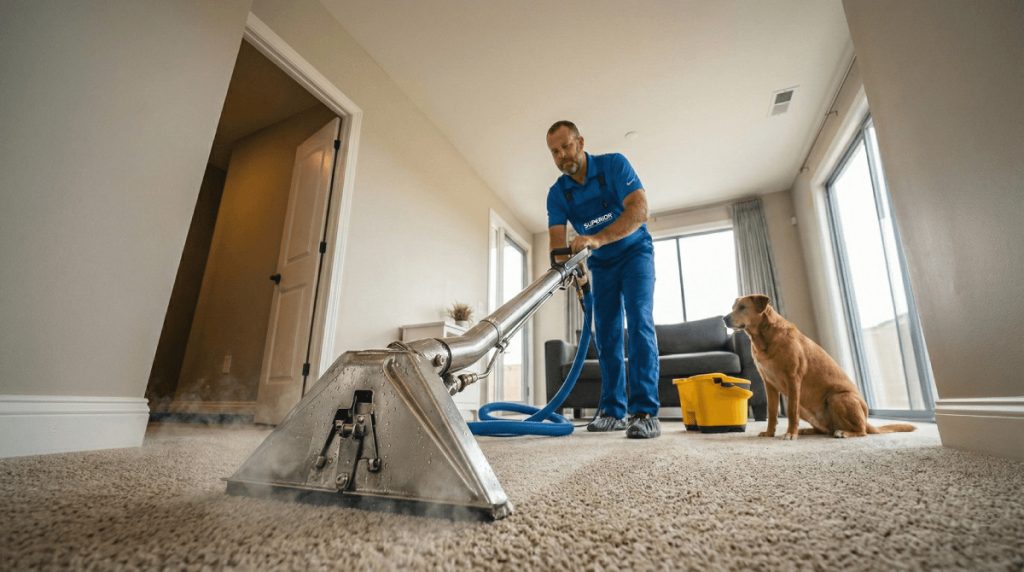
Nothing tests the bond between Oregon pet owners and their furry companions quite like discovering a fresh accident on the carpet—or worse, detecting that unmistakable pet odor that seems to linger no matter how many times you’ve cleaned the area. Whether you’re dealing with puppy training accidents in your Portland home, cat marking behavior in your Salem residence, or elderly pet incontinence in your Beaverton living room, pet stains and odors represent one of the most frustrating challenges facing pet-loving families throughout the Willamette Valley.
Dr. Carpet Clean, a family-owned and operated business serving Oregon communities for decades, understands the unique challenges pet owners face. With over 70 five-star reviews, BBB accreditation, and multiple locations throughout the Willamette Valley and Portland metropolitan area, we’ve helped thousands of pet-loving families eliminate stubborn pet stains and odors that household products simply cannot address.
Serving Portland, Beaverton, Tigard, Lake Oswego, Tualatin, West Linn, Oregon City, Milwaukie, Salem, Keizer, Woodburn, Silverton, Albany, Corvallis, and all communities throughout Washington, Multnomah, Clackamas, Marion, Polk, Linn, and Benton Counties, our Institute of Inspection, Cleaning and Restoration Certification (IICRC) certified technicians provide specialized pet stain and odor removal services that restore your carpets, furniture, and area rugs to fresh, clean conditions.
Understanding Why Pet Urine Creates Such Persistent Problems
Before exploring solutions, Oregon pet owners need to understand why pet urine creates such difficult challenges compared to other household stains:
The Complex Chemistry of Pet Urine
According to research published by the National Institutes of Health (NIH), pet urine contains multiple components that create odor and damage at different stages:
Urea and Urobilin: These water-soluble components create the initial yellow color and mild odor immediately after an accident occurs. This stage responds to quick cleanup efforts, which is why fresh accidents are easier to address than old contamination.
Uric Acid Crystals: As urine dries, uric acid forms crystals that bond tightly to carpet fibers and padding. These crystals are NOT water-soluble, meaning household cleaning products and water-based treatments cannot dissolve them. The crystals remain dormant in carpet until moisture reactivates them—from humidity, steam cleaning, or even someone walking on the carpet with damp shoes—causing odor to return even after cleaning appears successful.
Bacterial Decomposition: The Centers for Disease Control and Prevention (CDC) notes that bacteria quickly colonize urine deposits, feeding on organic components and producing ammonia and mercaptans—the compounds responsible for the powerful, persistent “pet odor” smell that permeates homes. These bacteria penetrate deep into carpet padding and even subfloor materials where surface cleaning cannot reach them.
Why Pet Urine Penetrates So Deeply
Unlike spilled beverages or food stains that typically affect only carpet surface fibers, pet urine flows downward through multiple layers:
- Carpet Pile: The visible carpet fibers absorb urine initially, showing discoloration that homeowners attempt to clean.
- Carpet Backing: Urine saturates the carpet backing material, bonding with adhesives and synthetic materials in ways that resist surface cleaning.
- Carpet Padding: The absorbent foam or felt padding beneath carpet acts like a sponge, pulling urine deep into its structure where it spreads laterally—often affecting areas much larger than the visible surface stain.
- Subfloor Contamination: In severe cases or with repeated accidents in the same location, urine penetrates through padding and contaminates wood or concrete subfloors. The U.S. Environmental Protection Agency (EPA) warns that organic contamination combined with moisture creates ideal conditions for mold growth on subflooring—a serious problem for Oregon homes already challenged by our humid climate.
This multi-layer contamination explains why surface cleaning—even with pet-specific products from hardware stores—provides only temporary relief for Portland, Salem, Eugene, and Corvallis area pet owners dealing with established urine damage.
Health Risks of Pet Urine Contamination
Beyond odor and appearance concerns, pet urine in carpets creates legitimate health risks documented by public health agencies:
Bacterial Growth and Pathogens
The CDC identifies household surfaces contaminated with pet waste as potential reservoirs for bacteria including E. coli, Salmonella, and Campylobacter. While healthy adults may tolerate exposure, children who play on floors, elderly family members, and individuals with compromised immune systems face increased infection risks from contaminated carpets.
For Oregon families in Tigard, Beaverton, Lake Oswego, and throughout the Portland metro area where children and pets share indoor spaces, proper professional treatment of pet contamination becomes a health priority rather than merely a cosmetic concern.
Ammonia Exposure
As bacteria decompose urine, they produce ammonia gas. The Agency for Toxic Substances and Disease Registry (ATSDR) notes that ammonia exposure can irritate eyes, respiratory passages, and skin. While concentrations in homes rarely reach dangerous acute levels, chronic low-level exposure to ammonia from pet-contaminated carpets can cause persistent respiratory irritation, particularly problematic for individuals with asthma.
The Oregon Health Authority reports that asthma affects approximately 9.3% of adults and 8.8% of children in Oregon. For the thousands of Salem, Keizer, Albany, and Corvallis residents managing asthma, pet odor contamination in homes represents an avoidable respiratory irritant that professional cleaning can eliminate.
Allergen Accumulation
Beyond urine, pet dander, saliva, and hair accumulate in carpets and upholstery. The National Institute of Allergy and Infectious Diseases (NIAID) identifies pet allergens as potent triggers for allergic reactions, noting that these proteins persist in homes long after pets no longer have contact with surfaces.
For Oregon families considering rehoming pets due to allergies, or those moving into previously pet-occupied homes in Portland, Beaverton, or Salem neighborhoods, professional deep cleaning and treatment often provides sufficient allergen reduction to make living situations tolerable.
Mold Growth from Moisture
The EPA emphasizes that persistent moisture promotes mold growth. Carpet padding saturated with urine never fully dries through surface cleaning, creating ongoing moisture that supports mold proliferation in Oregon’s already humid climate.
The Oregon Health Authority warns that mold exposure can trigger allergic reactions, asthma attacks, and respiratory infections—serious concerns for Willamette Valley families where moisture challenges already complicate indoor air quality management.
Why DIY Products and Methods Fail
Oregon pet owners waste hundreds of dollars annually on retail pet stain removers that provide only temporary relief. Understanding why these products fail helps explain the value of professional treatment:
Enzyme Cleaners from Stores
Retail enzyme cleaners claim to break down urine components, and quality products do work—but only on fresh surface contamination. These products fail for established pet damage because:
- Limited Penetration: Store products cannot penetrate deep into padding where most contamination resides. They treat surface fibers but leave untouched the bacteria and uric acid crystals causing persistent odor.
- Insufficient Active Enzyme Concentration: Professional enzyme treatments contain significantly higher concentrations of active enzymes than retail products. The difference is similar to comparing prescription medications to over-the-counter alternatives—both may contain the same active ingredient, but concentration determines effectiveness.
- Rapid Deactivation: Enzymes work through biological action that requires specific temperature, pH, and moisture conditions. Once applied to carpet, retail enzyme products begin losing effectiveness within hours as conditions change and enzymes degrade. Professional treatments use stabilized formulations maintaining activity longer.
- Incomplete Coverage: Homeowners treating visible stains often miss the full extent of contamination. Pet urine spreads laterally through padding, affecting areas much larger than surface stains indicate. Treating only visible areas leaves surrounding contamination untouched, ensuring odor return.
Steam Cleaning and Hot Water Extraction
Many Portland and Salem area pet owners attempt to address pet odors through carpet steam cleaning—either renting equipment or hiring general carpet cleaners without pet-specific expertise. These efforts often worsen problems:
- Moisture Reactivation: Hot water reactivates dormant uric acid crystals, releasing odor compounds throughout homes. Families often report that carpets smell worse after cleaning than before—a frustrating result of moisture interaction with urine crystals that water-based cleaning cannot remove.
- Padding Saturation: Rental equipment and inadequate professional systems cannot extract water thoroughly from padding. This extended moisture exposure allows bacteria to proliferate, actually increasing odor production while creating mold risk.
- Lack of Enzymatic Treatment: Standard carpet cleaning, even by professionals, focuses on general soil removal rather than specific enzyme treatment targeting urine contamination. Without proper enzyme application and dwell time, uric acid crystals remain intact regardless of how thoroughly carpets are cleaned.
Vinegar, Baking Soda, and Home Remedies
Internet advice promoting vinegar, baking soda, hydrogen peroxide, and other household products for pet urine treatment creates false hope. While these substances have legitimate cleaning applications, they cannot address the complex chemistry of established pet urine contamination:
- Vinegar: Acidic vinegar can neutralize ammonia odor temporarily but cannot break down uric acid crystals or kill bacteria producing ongoing smell. Vinegar also risks damaging carpet dyes and backing materials when used improperly.
- Baking Soda: While baking soda absorbs some surface moisture and odor, it cannot penetrate padding or chemically break down urine components. Vacuum removal of baking soda from deep carpet pile proves difficult, often leaving white residue visible on dark carpets.
- Hydrogen Peroxide: Commonly recommended for stain removal, hydrogen peroxide’s bleaching action can permanently damage carpet colors. While it may lighten urine stains, color removal creates visible light spots often worse than original staining—a particular problem for Tigard, Lake Oswego, and West Linn homeowners with expensive designer carpeting.
The Resoiling and Odor Return Cycle
Oregon pet owners report a frustrating pattern: they clean pet accidents, smell improves temporarily, then odor returns within days or weeks. This cycle occurs because surface cleaning removes water-soluble components while leaving uric acid crystals and deep contamination untouched. The next time moisture enters the carpet—from humidity, mopping nearby floors, or even morning dew tracked on shoes in our wet climate—dormant crystals reactivate and release odor, creating the impression that cleaning accomplished nothing.
Professional Pet Stain and Odor Removal Process
Dr. Carpet Clean employs specialized techniques addressing all aspects of pet contamination rather than merely treating surface symptoms:
Black Light Inspection and Detection
Our IICRC-certified technicians begin with comprehensive black light inspection identifying all areas of pet contamination—not just obvious stains visible in normal light. Pet urine fluoresces under ultraviolet light, revealing:
- Hidden Accidents: Multiple accidents invisible to the naked eye but contributing to persistent odor throughout Portland, Beaverton, Salem, and Corvallis area homes.
- Full Contamination Extent: The lateral spreading through padding often extends 2-3 times larger than surface stains indicate. Black light inspection reveals the true scope of damage requiring treatment.
- Traffic Patterns: Repeated accidents in pathways or specific rooms, indicating behavioral issues homeowners may not have recognized—valuable information for addressing underlying training or health problems with veterinary assistance.
Professional Enzyme Treatment
We apply pharmaceutical-grade enzyme solutions formulated specifically for pet urine remediation:
- Multiple Enzyme Types: Professional formulations contain multiple enzyme types—proteases, lipases, amylases, and cellulases—each targeting different components of pet urine and organic contamination. This multi-enzyme approach ensures complete breakdown of all urine components rather than addressing only single elements.
- Deep Injection: Using specialized equipment, we inject enzyme solutions deep into carpet padding—directly treating contamination where it resides rather than merely surface application that cannot reach affected areas.
- Extended Dwell Time: Professional treatment protocols include sufficient dwell time for enzymes to completely break down urine components. We maintain optimal moisture and temperature conditions during treatment, maximizing enzyme effectiveness.
- Stabilized Formulations: Our professional products maintain enzyme activity significantly longer than retail alternatives, ensuring complete treatment even for severe contamination in Eugene, Springfield, and Albany area homes with multiple pets or long-standing damage.
Subsurface Extraction
After enzyme treatment breaks down contaminants, we extract dissolved waste products from deep within carpet structure:
- High-Power Vacuum Systems: Our truck-mounted extraction systems generate significantly more vacuum power than portable or rental equipment, pulling contaminated moisture from padding and even subflooring materials.
- Multiple Extraction Passes: Severe contamination requires multiple treatment and extraction cycles to completely remove years of accumulated waste products from Tigard, Tualatin, and West Linn homes with senior pets or long-term training challenges.
- pH Neutralization: Following enzyme treatment and extraction, we apply pH-balancing rinses preventing residue that could attract dirt or cause rapid resoiling.
Deodorization and Sanitization
For carpets, furniture, and area rugs with persistent odor despite complete contamination removal, we offer specialized deodorization:
- Oxidizing Treatments: Safe oxidizing agents chemically neutralize odor molecules at the molecular level rather than merely masking smells with fragrances that fade within days.
- EPA-Registered Antimicrobials: We apply EPA-registered disinfectants that kill odor-causing bacteria, preventing new odor production even if minor contamination remains in inaccessible areas.
- Air Quality Improvement: Proper treatment improves overall indoor air quality throughout Salem, Keizer, Woodburn, and Silverton homes by eliminating bacterial growth and chemical breakdown products contributing to poor air quality beyond just “pet smell.”
Padding and Subfloor Treatment
Severe contamination—common in homes with elderly incontinent pets or long-standing training problems—may require padding removal and subfloor treatment:
- Padding Replacement: Carpet padding saturated with years of urine contamination cannot be fully restored. We remove and replace affected padding, ensuring complete elimination of odor sources.
- Subfloor Sealing: Wood subfloors contaminated with pet urine require sealing with specialized products that encapsulate odor molecules and prevent off-gassing into replacement padding and carpet. The EPA recognizes proper sealing as essential for complete odor remediation when structural materials are contaminated.
- Concrete Treatment: Concrete subfloors in Portland, Beaverton, and Lake Oswego basements or ground-level rooms affected by pet accidents require different treatment approaches including enzymatic application followed by sealing with moisture-resistant barriers preventing future odor migration.
Furniture and Upholstery Pet Damage
Pet accidents aren’t limited to carpets. Furniture and upholstery suffer similar contamination requiring specialized professional treatment:
Why Furniture Cleaning Differs from Carpet Cleaning
Furniture construction creates unique challenges for pet urine remediation:
- Foam Cushioning: Upholstery foam absorbs urine like a sponge, drawing contamination deep into cushion cores where it resists surface cleaning. Unlike carpet padding that can be replaced relatively easily, furniture cushions require specialized extraction techniques or replacement.
- Fabric Delicacy: Many upholstery fabrics cannot tolerate aggressive cleaning required for complete urine removal. Professional assessment determines appropriate treatment balancing contamination removal against fabric damage risk.
- Structural Contamination: Pet urine flowing through cushions often contaminates wood frames, springs, and other structural components invisible without disassembly. Complete odor removal sometimes requires partial furniture disassembly for proper treatment.
Professional Furniture Treatment Process
Our upholstery cleaning specialists provide comprehensive pet damage treatment for Salem, Albany, Corvallis, and Portland metro area furniture:
- Fabric Testing: We test upholstery for colorfastness and cleaning tolerance, ensuring treatment methods won’t cause dye bleeding or fabric damage.
- Deep Injection Treatment: Specialized tools inject enzyme solutions directly into foam cushioning, treating contamination at its source rather than merely surface application.
- Hot Water Extraction: Our portable extraction systems designed specifically for furniture provide powerful cleaning while controlling moisture to prevent over-wetting that could damage furniture frames or cause extended drying times.
- Cushion Removal: When necessary, we remove cushions for separate treatment, allowing direct access to contamination and ensuring complete enzyme penetration throughout foam cores.
- Deodorization: Following cleaning, we apply deodorizing treatments that neutralize any remaining odor molecules, ensuring fresh, clean furniture throughout your Tigard, Beaverton, or Lake Oswego home.
Area Rug Pet Damage and In-Plant Cleaning
Area rugs present unique challenges and opportunities for pet damage remediation:
Why In-Plant Cleaning Is Superior for Pet-Damaged Rugs
Unlike wall-to-wall carpeting, area rugs can be transported to our specialized cleaning facility where we provide treatment impossible to achieve on-location:
- Complete Immersion: We fully immerse rugs in cleaning solutions, ensuring enzyme treatment penetrates completely through rug pile, foundation, and backing materials—impossible to achieve with on-location treatment.
- Thorough Contamination Removal: Our specialized equipment removes contamination from rug foundations and backing materials where most pet damage resides, addressing the source of persistent odors that on-location cleaning cannot reach.
- Proper Drying: Climate-controlled drying prevents mold growth while ensuring rugs return to Portland, Salem, Beaverton, and surrounding area homes completely dry and ready for use.
- Fringe Treatment: Rug fringes often show severe pet damage from urine wicking. Our in-plant facility allows specialized fringe cleaning and treatment restoring appearance and removing odor.
Our In-Plant Rug Cleaning Process
- Free Pickup: We provide complimentary pickup throughout Portland, Beaverton, Tigard, Lake Oswego, Tualatin, Salem, Keizer, Albany, Corvallis, and all service areas, eliminating the hassle of transporting large or heavy rugs.
- Detailed Inspection: At our facility, we thoroughly inspect rugs under optimal lighting, documenting all pet damage and determining appropriate treatment protocols.
- Complete Immersion Cleaning: Rugs receive full immersion washing with enzyme solutions breaking down all urine components throughout rug structure.
- Multiple Rinse Cycles: We thoroughly rinse rugs, removing all cleaning products, dissolved contamination, and odor molecules.
- Professional Drying: Climate-controlled drying ensures rugs return completely dry, preventing mold growth and moisture damage common with inadequate drying.
- Free Delivery: We return cleaned rugs to your home and place them in their original locations, making the entire process convenient and hassle-free for busy Oregon families.
Preventing Future Pet Damage
While professional cleaning addresses existing damage, Oregon pet owners can implement strategies reducing future accidents:
Medical Issues vs. Behavioral Problems
The American Veterinary Medical Association (AVMA) emphasizes distinguishing medical issues from behavioral problems when pets have accidents indoors:
- Medical Causes: Urinary tract infections, diabetes, kidney disease, cognitive dysfunction in senior pets, and mobility issues preventing access to outdoor areas all cause inappropriate elimination. Portland, Salem, and Eugene area pet owners noticing sudden changes in house training should consult veterinarians before assuming behavioral problems.
- Behavioral Causes: Anxiety, incomplete training, marking behavior, and response to household changes cause behavioral elimination. Working with veterinary behaviorists or professional trainers addresses underlying issues rather than merely treating symptoms.
Enzymatic Spot Treatment
For fresh accidents caught immediately, Oregon pet owners can minimize damage through proper initial treatment:
- Blot, Don’t Rub: Blot fresh urine with white towels or paper towels, absorbing maximum moisture before it penetrates padding. Rubbing spreads contamination and damages carpet pile.
- Immediate Enzyme Application: Quality enzyme cleaners work best on fresh contamination. Apply immediately following manufacturer instructions, allowing proper dwell time before blotting.
- Professional Follow-Up: Even with proper immediate treatment, schedule professional inspection and treatment for any pet accidents ensuring complete contamination removal before problems develop.
Protective Treatments
- Carpet Protectors: Professional carpet protector application following cleaning creates barriers resisting liquid penetration, allowing more time to address accidents before urine saturates padding.
- Washable Rugs: High-traffic pet areas benefit from washable area rugs that can be completely cleaned in washing machines, preventing contamination of underlying carpeting in your Beaverton, Tigard, or West Linn home.
- Pet-Specific Areas: Designating specific rooms with easy-to-clean flooring for pet access reduces carpet exposure to accidents, particularly helpful for elderly or incontinent pets.
The True Cost of Pet Damage: Replacement vs. Professional Restoration
Oregon homeowners facing severe pet damage often assume carpet replacement represents the only solution. Understanding the economics helps make informed decisions:
Carpet Replacement Costs
According to the U.S. Census Bureau housing data, typical Oregon homes contain 1,200-1,500 square feet of carpeting. Quality carpet installation costs $4-$10 per square foot including materials and labor, meaning complete carpet replacement ranges from $4,800-$15,000 for average Portland, Salem, or Corvallis area homes.
Professional Restoration Costs
Comprehensive professional pet damage restoration including enzyme treatment, extraction, deodorization, and selective padding replacement typically costs $500-$2,000 depending on damage extent—representing 10-40% of replacement costs while extending carpet life by years.
Making the Right Decision
Good Candidates for Restoration: Carpets less than 10 years old in good condition except for pet damage, isolated damage areas rather than whole-home contamination, and quality carpeting worth preserving all benefit from professional restoration rather than replacement.
Replacement Indicators: Carpets near end of expected lifespan, severe whole-home contamination, subfloor damage, or desire to upgrade flooring materials may justify replacement over restoration.
Our honest assessment helps Lake Oswego, Tigard, Beaverton, and Portland area homeowners make informed decisions balancing costs against realistic outcomes, ensuring you invest appropriately whether in restoration or replacement.
Why Choose Dr. Carpet Clean for Pet Damage Restoration
As a family-owned and operated business serving Oregon communities for decades, Dr. Carpet Clean brings specialized expertise to pet damage challenges:
- IICRC Pet Damage Certification: Our technicians maintain specific certification in pet damage restoration, demonstrating mastery of specialized techniques beyond general carpet cleaning.
- Black Light Inspection: We identify all contamination—not just obvious stains—ensuring complete treatment rather than missing hidden damage contributing to persistent odor.
- Professional Enzyme Products: Our pharmaceutical-grade treatments contain significantly higher active enzyme concentrations than retail products, ensuring complete breakdown of urine components.
- Multiple Treatment Options: We offer solutions ranging from basic enzyme treatment to complete padding replacement and subfloor sealing, customizing approaches to damage severity and budget.
- BBB Accreditation and Reviews: Our BBB accreditation and over 70 five-star reviews demonstrate consistent quality and customer satisfaction across thousands of pet damage jobs throughout Oregon.
- Honest Assessment: We provide realistic expectations about achievable results, honestly communicating when damage is too severe for restoration and replacement represents the better option.
- Pet-Loving Staff: As pet owners ourselves, we understand the emotional aspects of pet damage—the love for animals balanced against frustration with messes. We approach every job with empathy and respect for the human-animal bond.
- Satisfaction Guarantee: We stand behind our pet damage restoration with a guarantee. If odor returns after our treatment, we re-treat affected areas at no additional charge—that’s our commitment as a family-owned business dedicated to Oregon families.
Serving Pet-Loving Families Throughout Oregon
Dr. Carpet Clean proudly serves pet owners throughout the Willamette Valley and Portland metropolitan area:
Portland Metropolitan Area:
- Portland (all neighborhoods)
- Beaverton
- Tigard
- Lake Oswego
- Tualatin
- West Linn
- Oregon City
- Milwaukie
- Hillsboro
- Gresham
- All Washington County communities
- All Multnomah County communities
- All Clackamas County communities
Mid-Willamette Valley:
- Salem
- Keizer
- Woodburn
- Silverton
- Stayton
- Mt. Angel
- Dallas
- Independence
- Monmouth
- All Marion County communities
- All Polk County communities
Southern Willamette Valley:
- Albany
- Corvallis
- Lebanon
- Sweet Home
- Brownsville
- All Linn County communities
- All Benton County communities
Frequently Asked Questions About Pet Stain and Odor Removal
Can you really remove old pet urine smell that's been there for years?
Yes, with proper professional treatment. Old urine requires aggressive enzyme treatment, deep extraction, and sometimes padding replacement, but complete odor elimination is achievable even for severe long-term contamination common in homes with elderly incontinent pets.
How long does professional pet odor treatment take?
Treatment time varies by damage extent. Single-room treatment typically requires 2-3 hours, while whole-home severe contamination may require 6-8 hours or multiple visits. We provide realistic timeframes during inspection based on your specific situation.
Will the odor come back after professional treatment?
Properly executed professional treatment permanently eliminates odor sources. If odor returns, it typically indicates incomplete treatment—missed areas, inadequate enzyme dwell time, or contamination so severe that padding replacement is necessary. Our guarantee ensures we re-treat any areas where odor returns.
How soon can we use our carpets after pet odor treatment?
Most carpets dry within 6-12 hours after treatment. We recommend keeping pets off treated areas during drying and for 24 hours after treatment to prevent re-contamination while enzyme treatments complete their work.
Is professional pet odor treatment safe for children and pets?
Yes. Our enzyme products and treatments are safe for residential use around children and pets. We use EPA-registered products that meet stringent safety standards, and thorough rinsing removes all treatment residues.
Can black light inspection find all pet accidents?
Black light reveals urine contamination invisible in normal light, but some very old or heavily cleaned areas may not fluoresce strongly. We combine black light inspection with odor assessment, moisture detection, and homeowner information to identify all affected areas.
Should I clean up fresh accidents before calling you?
Yes, blot fresh accidents immediately to prevent deep penetration. However, avoid using household cleaning products that could interfere with our enzyme treatments. Simple blotting with white towels provides best initial response.
How much does professional pet odor removal cost?
Costs vary widely based on damage extent, ranging from $200-300 for single-room enzyme treatment to $1,500-2,500 for whole-home severe contamination requiring padding replacement. We provide detailed estimates after inspection, ensuring you understand costs before committing to treatment.
Can you remove pet odor from hardwood floors?
Yes, though treatment approaches differ from carpet. Pet urine can penetrate hardwood finish and stain wood requiring sanding and refinishing in severe cases. We assess damage honestly, recommending appropriate treatment or referring to wood floor specialists when necessary.
What if professional cleaning doesn't work?
Our guarantee ensures satisfaction. If odor persists after treatment, we re-treat affected areas. In rare cases where contamination is too severe for restoration, we honestly communicate this and discuss replacement options, helping you make informed decisions.
Don’t Live with Pet Odor Another Day
You love your pets—but you don’t have to live with the mess. Professional pet stain and odor removal eliminates the embarrassment of pet smells when guests visit, the frustration of repeated failed DIY attempts, the health concerns from bacterial contamination, and the worry about permanent carpet damage.
Dr. Carpet Clean‘s specialized pet damage restoration services combine advanced enzyme treatments, professional extraction equipment, and decades of experience serving Oregon’s pet-loving families. As a family-owned and operated business with over 70 five-star reviews and BBB accreditation, we deliver results that make your home fresh and clean again.
Call us today or visit DrCarpetClean.com to schedule your pet stain and odor assessment. Our knowledgeable staff will answer your questions, explain our treatment process, and provide honest recommendations based on your specific situation.
With multiple locations throughout the Willamette Valley and Portland metropolitan area, we’re your local pet damage restoration experts serving Portland, Beaverton, Tigard, Lake Oswego, Tualatin, Salem, Keizer, Albany, Corvallis, and all surrounding communities.
Stop living with pet odor. Contact Dr. Carpet Clean today and experience the difference professional enzyme treatment makes. Your home can be fresh, clean, and odor-free again—while keeping the pets you love. That’s the Dr. Carpet Clean promise, backed by decades of family ownership, professional expertise, and genuine commitment to Oregon families and their beloved pets.