
That musty smell lingering in your basement. The dark spots appearing along baseboards in your Portland home. The persistent allergies that never quite go away despite cleaning. These aren’t just annoyances—they’re warning signs of a serious health threat growing beneath your feet: mold in your carpets.
For Oregon homeowners throughout the Willamette Valley and Portland metropolitan area, carpet mold represents more than a cosmetic problem. The combination of our region’s persistent rainfall, high humidity, and mild temperatures creates perfect conditions for dangerous mold growth that thrives hidden within carpet fibers, padding, and subflooring—often completely invisible until serious health problems develop or extensive damage occurs.
Dr. Carpet Clean, a family-owned and operated business serving Oregon communities for decades, has witnessed firsthand the devastating health and property damage that carpet mold causes when left unaddressed. With over 70 five-star reviews, BBB accreditation, and multiple locations throughout the Willamette Valley and Portland metropolitan area, we’ve helped thousands of families across Portland, Beaverton, Tigard, Lake Oswego, Tualatin, Salem, Keizer, Albany, Corvallis, and surrounding communities identify, treat, and prevent carpet mold before it compromises family health and home value.
Why Oregon’s Climate Is Perfect for Carpet Mold
Understanding why mold thrives in Oregon homes requires examining the specific climate factors that distinguish the Pacific Northwest from drier regions:
The Precipitation Reality
According to the National Oceanic and Atmospheric Administration (NOAA), the Willamette Valley receives an average of 40-50 inches of annual precipitation, with the Portland metropolitan area averaging 42.8 inches annually. The National Weather Service documents that this precipitation concentrates heavily between October and May, with November through January being particularly wet.
During these months, Salem, Eugene, Corvallis, Albany, and Portland area residents track substantial moisture indoors on shoes and clothing. This moisture doesn’t simply evaporate—it penetrates carpets where it creates the damp conditions mold requires for growth. Even homes with excellent drainage and waterproofing face moisture challenges from the sheer volume and persistence of Oregon’s winter precipitation.
The Humidity Factor
Beyond direct rainfall, Oregon’s marine-influenced climate produces high ambient humidity year-round. NOAA climate data shows that relative humidity in the Willamette Valley frequently exceeds 70-80% during fall and winter months, with morning fog common throughout the valley creating additional moisture exposure.
The U.S. Environmental Protection Agency (EPA) identifies relative humidity above 60% as conducive to mold growth. When outdoor humidity levels routinely exceed this threshold—as occurs throughout Oregon’s wet season—indoor humidity inevitably increases despite heating systems, creating conditions where carpets absorb atmospheric moisture even without direct water exposure.
For Tigard, Beaverton, Lake Oswego, and other Portland metro area homes built on valley floors or near waterways like the Willamette River, Tualatin River, or Fanno Creek, ground-level moisture compounds atmospheric humidity, creating particularly challenging conditions for basement and ground-floor carpets.
Temperature Patterns Supporting Mold Growth
While Oregon’s mild climate represents a quality-of-life advantage for residents, it unfortunately also supports year-round mold growth. The National Weather Service reports that Portland-area winter lows average 35-40°F while summer highs average 75-85°F—a temperature range where most mold species thrive.
Unlike regions with harsh winters that kill or dormant mold, Oregon’s mild temperatures allow continuous mold activity throughout the year. Spring warming after wet winters triggers explosive mold growth in carpets that absorbed winter moisture, often causing visible contamination to appear seemingly overnight in Salem, Keizer, Woodburn, and Silverton area homes.
The Basement and Ground-Floor Challenge
Many Oregon homes, particularly those built between 1950-1980 in established Portland, Beaverton, Salem, and Eugene neighborhoods, feature basements or ground-floor living spaces with carpeting. The U.S. Department of Housing and Urban Development (HUD) notes that basements face elevated moisture risks from multiple sources including groundwater seepage, condensation, and inadequate ventilation.
In Oregon’s wet climate, these challenges intensify. Even homes without obvious water intrusion experience elevated basement humidity from ground moisture wicking through concrete foundations—a phenomenon particularly common in older homes constructed before modern moisture barrier requirements.
The Hidden Health Risks of Carpet Mold
The Centers for Disease Control and Prevention (CDC) emphasizes that mold exposure poses legitimate health risks, particularly for vulnerable populations. Understanding these risks helps Oregon families recognize why carpet mold demands immediate professional attention:
Respiratory Problems and Allergic Reactions
The Oregon Health Authority warns that mold exposure triggers allergic reactions in many individuals, with symptoms including:
- Sneezing and runny nose
- Red, itchy, watery eyes
- Skin rashes and irritation
- Throat irritation and coughing
- Wheezing and difficulty breathing
- Sinus congestion and headaches
For the approximately 9.3% of Oregon adults and 8.8% of children managing asthma according to Oregon Health Authority data, mold exposure represents a serious asthma trigger that can precipitate dangerous attacks requiring emergency medical attention.
Families in Portland, Beaverton, Tigard, Lake Oswego, Salem, and throughout the Willamette Valley often report that respiratory symptoms mysteriously improve when they leave home for work or vacation—a strong indication that indoor mold contamination, frequently originating from carpets, drives their health problems.
Immune System Impacts
The National Institute of Environmental Health Sciences (NIEHS) explains that mold produces mycotoxins—toxic compounds that some mold species release as part of their growth process. While mycotoxin exposure typically requires high concentrations, individuals with compromised immune systems face elevated risks even from moderate mold exposure.
Oregon families caring for elderly relatives, individuals undergoing cancer treatment, organ transplant recipients taking immunosuppressive medications, or people with HIV/AIDS should treat any carpet mold discovery as a serious health emergency requiring immediate professional remediation.
Chronic Inflammatory Response
Research published by the National Institutes of Health (NIH) suggests that chronic mold exposure may trigger persistent inflammatory responses affecting overall health beyond simple allergic reactions. While research continues, evidence indicates that long-term mold exposure—common in homes where carpet mold grows undetected for months or years—may contribute to chronic fatigue, difficulty concentrating, and other systemic health problems.
Children’s Heightened Vulnerability
The EPA emphasizes that children face elevated mold exposure risks for multiple reasons:
Higher Breathing Rates: Children breathe more air per pound of body weight than adults, increasing exposure to airborne mold spores released from contaminated carpets in Portland, Salem, Eugene, and Corvallis area homes.
Floor-Level Activities: Young children play on floors where mold spore concentrations are highest, creating direct contact exposure beyond simple inhalation.
Developing Systems: Children’s developing respiratory and immune systems show greater sensitivity to environmental toxins including mold, with early-life exposure potentially affecting long-term health.
For Oregon families with young children, basement playrooms or bedrooms with carpeting demand particular vigilance regarding mold prevention and early detection.
Mental Health and Cognitive Effects
Emerging research documented by the NIH suggests connections between mold exposure and mental health symptoms including depression, anxiety, and cognitive difficulties. While mechanisms remain under investigation, families in Tigard, Beaverton, West Linn, and Lake Oswego homes with known mold problems often report mood improvements and better mental clarity following professional mold remediation—suggesting real, if not fully understood, connections between mold exposure and psychological wellbeing.
How Mold Grows in Oregon Carpets
Understanding the carpet mold growth process helps homeowners recognize risk factors and warning signs requiring professional intervention:
The Moisture Source
Mold requires moisture to grow, but the source in Oregon homes varies:
- Direct Water Intrusion: Basement flooding, pipe leaks, roof leaks, or window seepage introduce substantial water that saturates carpets and padding. Even after surface drying, padding retains moisture supporting mold growth for weeks.
- High Humidity Absorption: During Oregon’s wet months, carpets absorb atmospheric moisture from indoor humidity exceeding 60%. The EPA notes this passive moisture absorption, while slower than direct water exposure, eventually creates conditions supporting mold growth—particularly in poorly ventilated spaces common in Salem, Keizer, and Albany area basements.
- Tracked-In Moisture: The EPA reports that approximately 80% of indoor dirt enters through foot traffic. During Oregon’s rainy season from October through May, this tracked-in material isn’t just dirt—it’s substantial moisture that penetrates entryway carpets in Portland metro area homes, creating localized damp conditions where mold colonizes.
- Condensation: Temperature differentials between warm indoor air and cold surfaces cause condensation. Carpets placed directly on cold concrete slabs in Oregon basements experience condensation on the underside invisible from above, creating perfect mold growth conditions that homeowners discover only when odors develop or visible mold appears.
- Pet Accidents: As discussed in our comprehensive pet stain guide, pet urine introduces both moisture and organic nutrients supporting vigorous mold growth. Undetected or inadequately treated pet accidents create mold problems compounding urine odor issues.
The Organic Food Source
Mold feeds on organic materials, and carpets provide abundant nutrition:
- Carpet Fibers: Natural fiber carpets—wool, cotton, jute backing—provide direct food sources for mold. Synthetic carpets resist mold growth better but still support colonization when contaminated with organic matter.
- Dirt and Debris: Skin cells, food particles, pet dander, pollen, and other organic debris trapped in carpet pile provide mold nutrition even in synthetic carpets that otherwise resist growth.
- Carpet Padding: Most carpet padding contains organic components or adhesives providing mold nutrition. Once moisture penetrates padding, mold growth often becomes extensive before surface symptoms appear.
- Wood Subflooring: Mold growing on carpet padding frequently spreads to wood subflooring beneath, creating structural contamination requiring extensive remediation beyond simple carpet cleaning.
The Hidden Growth Phase
The CDC notes that mold can begin growing on damp surfaces within 24-48 hours of moisture exposure. In Oregon carpets, this growth typically follows a predictable pattern:
- Day 1-2: Moisture exposure occurs from flooding, leaks, high humidity, or tracked-in water. Carpet surfaces may appear wet but quickly dry, creating false security that the problem resolved itself.
- Day 3-7: While surfaces dry, moisture remains trapped in padding and subflooring. Mold spores always present in Oregon’s outdoor air settle on damp materials and begin germinating, starting colonization invisible from above.
- Week 2-4: Mold colonies establish in padding and spread through carpet backing. No visible surface symptoms appear yet, but sensitive individuals may notice musty odors or experience unexplained allergy symptoms.
- Month 2-3: Mold growth becomes extensive within padding and begins penetrating carpet pile from below. Musty odors intensify, and dark spots may appear on carpet surfaces or along baseboards where moisture concentration is highest.
- Month 4+: Without intervention, mold growth becomes severe, often spreading to walls, subflooring, and HVAC systems that circulate spores throughout homes in Corvallis, Eugene, Springfield, and Lebanon. By this stage, professional remediation becomes complex and expensive compared to early intervention.
Identifying Carpet Mold in Your Oregon Home
Early detection prevents serious health problems and extensive damage. Watch for these warning signs throughout your Portland, Salem, Eugene, or Corvallis area home:
Visual Indicators
- Discoloration: Dark spots, patches, or staining on carpet surfaces often indicate mold growth, though color varies by mold species. Black, green, brown, white, or orange discoloration all potentially indicate mold colonization.
- Baseboards and Walls: Mold often appears first along baseboards and lower wall sections where moisture concentrates. Tigard, Beaverton, and Lake Oswego homeowners should inspect carefully where carpets meet walls, particularly in corners and behind furniture.
- Padding Separation: When lifting carpet edges, visible mold on padding backing or separation of padding layers indicates severe moisture exposure and active mold growth requiring immediate professional attention.
- Texture Changes: Carpet pile that feels damp, crusty, or different from surrounding areas may harbor mold even without visible discoloration.
Olfactory Warnings
- Musty Odor: The characteristic musty, earthy smell associated with mold represents the clearest warning sign. The CDC notes that mold odor often appears before visible growth, making smell detection crucial for early intervention.
- Intensification When Humid: Mold odors that worsen during rainy weather or when humidity rises indicate active mold feeding on moisture fluctuations—common in Salem and Albany area homes during wet months.
- Localized Smell: Odors concentrated in specific rooms or areas point to localized mold problems, often in basements, bathrooms, or areas near plumbing.
Health-Based Detection
- Symptom Patterns: Respiratory symptoms, allergies, or headaches that improve when leaving home and worsen upon returning suggest indoor mold contamination. Oregon families should track symptom patterns, noting correlations with time spent in specific rooms or areas of their homes.
- Worsening Asthma: The Oregon Health Authority identifies mold as a significant asthma trigger. Unexplained asthma control deterioration warrants thorough home inspection for mold contamination.
Environmental Clues
- Previous Water Damage: Homes that experienced flooding, leaks, or water intrusion—even if seemingly resolved—face elevated mold risks requiring professional inspection. Portland and Salem area homes affected by recent storms or plumbing failures should receive professional mold assessment regardless of visible symptoms.
- High Humidity: Basements or rooms where humidity consistently exceeds 60% face mold growth risks. Simple humidity monitors available at hardware stores help Oregon homeowners identify problem areas before mold appears.
- Poor Ventilation: Spaces with inadequate air circulation—common in Oregon basements, closets, and rooms with closed doors—create conditions supporting mold growth even without obvious moisture sources.
Professional Mold Inspection and Testing
When warning signs appear, professional assessment determines extent and appropriate remediation:
Visual Inspection
Dr. Carpet Clean‘s Institute of Inspection, Cleaning and Restoration Certification (IICRC) certified technicians provide comprehensive mold inspection identifying:
- Visible Mold Growth: Obvious surface contamination requiring treatment.
- Hidden Contamination: Lifting carpet corners and removing baseboards reveals padding and subfloor mold invisible from surface inspection.
- Moisture Sources: Identifying what’s feeding mold growth—leaks, humidity, condensation, or drainage problems—ensures remediation addresses causes rather than just symptoms.
- Extent Assessment: Determining whether contamination is localized or widespread throughout Portland, Beaverton, Tigard, or Salem area homes guides appropriate remediation approaches.
Moisture Mapping
Professional moisture meters detect elevated moisture levels in carpets, padding, and subflooring before visible mold appears. This technology identifies at-risk areas requiring preventive treatment in addition to addressing existing contamination.
Air Quality Testing
For severe contamination or when health symptoms suggest extensive mold despite limited visible growth, air quality testing quantifies mold spore concentrations and identifies specific species present. While not always necessary, testing provides valuable information for Oregon homes with immunocompromised residents or when remediation extent requires determination for insurance or real estate purposes.
Professional Carpet Mold Remediation
The EPA recommends professional remediation for mold contamination covering areas larger than 10 square feet. Our systematic approach ensures complete contamination removal and prevents recurrence:
Containment and Air Filtration
Professional mold remediation begins with containing affected areas to prevent spore spread during cleaning. We establish negative air pressure using HEPA-filtered air scrubbers that capture airborne spores before they circulate to uncontaminated areas of your Lake Oswego, West Linn, or Oregon City home.
Source Elimination
- Carpet and Padding Removal: Severely contaminated carpet and padding require removal and disposal. Attempting to clean heavily molded materials risks incomplete remediation and health exposure. We safely remove contaminated materials following EPA guidelines protecting your family during the process.
- Subfloor Treatment: After carpet removal, we treat subflooring with EPA-registered antimicrobial solutions that kill remaining mold and prevent regrowth. Severely contaminated wood subflooring may require replacement in extreme cases common in older Salem, Eugene, and Corvallis homes with long-term moisture problems.
- HVAC System Cleaning: Mold in carpets frequently spreads spores through HVAC systems, contaminating ductwork throughout homes. Our comprehensive approach includes air duct cleaning ensuring complete mold removal rather than leaving reservoirs that recontaminate treated areas.
Deep Cleaning for Salvageable Materials
For limited contamination caught early or when carpet replacement isn’t immediately feasible, professional deep cleaning may address mold while preserving materials:
- HEPA Vacuuming: Commercial HEPA vacuum systems remove surface mold spores and contaminated debris before wet cleaning introduces moisture that could worsen problems.
- Antimicrobial Treatment: Professional-grade mold-killing solutions penetrate carpet fibers and padding, eliminating active growth. These products, significantly stronger than retail options, provide thorough treatment when conditions allow carpet salvage.
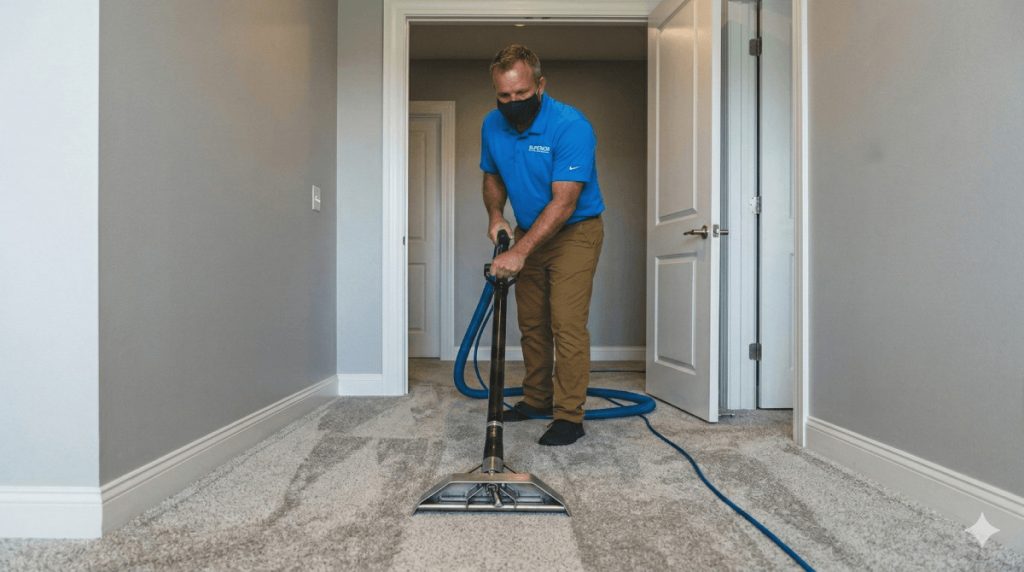
- Hot Water Extraction: Our truck-mounted systems deliver water heated above 200°F—temperatures that kill most mold species—while powerful extraction removes moisture preventing regrowth. The IICRC recognizes hot water extraction as effective for appropriate mold situations.
- Rapid Drying: Professional air movers and dehumidifiers reduce drying time to under 6 hours, preventing the extended moisture exposure that allows mold regrowth. This rapid drying is critical for Oregon’s humid climate where slow drying risks immediate recontamination.
Addressing Moisture Sources
Successful mold remediation requires eliminating moisture sources feeding growth:
- Leak Repair: We identify and help coordinate repair of plumbing leaks, roof leaks, or foundation water intrusion causing carpet moisture in Portland and Salem metro area homes.
- Drainage Improvement: Poor grading, clogged gutters, or inadequate perimeter drainage directing water toward foundations require correction to prevent recurrence.
- Humidity Control: Installing dehumidifiers in Oregon basements maintains humidity below 50%, preventing the passive moisture absorption in carpets that supports mold growth.
- Ventilation Enhancement: Improving air circulation through exhaust fans, air circulation systems, or simply opening doors and windows during dry weather helps control humidity in problem areas.
Preventing Carpet Mold in Oregon Homes
Prevention requires ongoing vigilance in our challenging climate:
Immediate Response to Water Exposure
The EPA emphasizes acting within 24-48 hours when carpets get wet:
- Extract Water Immediately: Use wet vacuums or professional extraction services to remove maximum water before it penetrates padding and subflooring.
- Elevate and Dry: Lifting wet carpet corners allows air circulation beneath, accelerating drying and preventing mold establishment.
- Professional Assessment: Even after apparently successful drying, professional moisture testing confirms complete drying, preventing hidden mold growth that appears weeks later.
Humidity Management
- Dehumidifiers: The EPA recommends maintaining indoor relative humidity between 30-50%. Basements in Tigard, Beaverton, Salem, and Albany typically require dehumidifiers achieving this target during Oregon’s humid months.
- Humidity Monitoring: Inexpensive humidity monitors help Oregon homeowners track conditions, identifying problem areas before mold appears.
- Ventilation: Running bathroom exhaust fans during and after showers, using kitchen exhaust during cooking, and occasionally opening windows during dry weather reduces indoor humidity contributing to carpet moisture.
Strategic Carpet Choices
- Basement Flooring Alternatives: Consider replacing basement carpeting with tile, luxury vinyl plank, or other moisture-resistant flooring. While less comfortable than carpet, these materials prevent mold problems endemic to Oregon basement carpets.
- Carpet Padding Selection: When carpeting basements or ground-floor areas in Portland and Salem metro homes, choose synthetic padding with antimicrobial treatments resisting mold growth better than organic materials.
- Area Rugs Over Wall-to-Wall: Using area rugs rather than wall-to-wall carpeting in moisture-prone areas allows easier inspection, cleaning, and replacement if mold develops.
Regular Professional Cleaning
The IICRC recommends professional carpet cleaning every 12-18 months for most homes. Oregon properties benefit from annual cleaning that:
- Removes organic debris feeding mold
- Reduces moisture trapped in fibers and padding
- Allows professional inspection identifying developing problems
- Applies protective treatments resisting mold establishment
Entry Mat Systems
The EPA identifies proper entry matting as highly effective for reducing moisture tracking. Quality mat systems inside and outside all exterior doors capture moisture before it reaches interior carpeting in your Corvallis, Eugene, or Springfield home.
When to Replace vs. Remediate
Honest assessment helps Oregon homeowners make appropriate decisions:
Good Candidates for Professional Cleaning
- Early Detection: Mold discovered within weeks of moisture exposure often responds well to professional cleaning, particularly when contamination remains surface-level without padding penetration.
- Limited Extent: Contamination affecting small areas (under 10 square feet) in otherwise healthy carpets may warrant treatment rather than replacement.
- Quality Carpets: Expensive carpeting worth preserving justifies investment in professional mold remediation when caught early enough for successful treatment.
Replacement Indicators
- Extensive Contamination: Mold affecting large areas, multiple rooms, or throughout padding requires carpet replacement. The EPA notes that extensive contamination resists complete remediation, risking health exposure if retention is attempted.
- Subfloor Penetration: When mold spreads to subflooring beneath padding, carpet must be removed for proper subfloor treatment regardless of carpet condition.
- Compromised Residents: Homes with immunocompromised individuals, severe asthma, or young children benefit from conservative approaches favoring replacement over attempted remediation, eliminating any residual exposure risk.
- Carpet Age and Condition: Older carpets nearing replacement anyway make poor candidates for expensive mold remediation. The Carpet and Rug Institute notes typical carpet lifespans of 5-15 years depending on quality and traffic; moldy carpets in this range warrant replacement rather than treatment investment.
Our honest assessment helps Lake Oswego, Tigard, West Linn, and Portland area families make informed decisions balancing health protection, property value, and budget considerations.
The True Cost of Ignoring Carpet Mold
Delaying mold remediation creates escalating costs:
Health Expenses
Untreated mold exposure leads to medical costs from doctor visits, prescriptions, emergency room visits for severe asthma attacks, and potential long-term health impacts requiring ongoing treatment. For Oregon families, these health costs far exceed timely mold remediation expenses.
Property Damage
Mold spreads from carpets to walls, ductwork, furniture, and structural materials. What begins as localized carpet contamination becomes whole-home remediation requiring tens of thousands of dollars when ignored. Salem, Keizer, and Albany homeowners who delay treatment often face costs 10-20 times higher than early intervention would have required.
Real Estate Impact
The U.S. Department of Housing and Urban Development recognizes mold as affecting property value and marketability. Oregon homes with mold histories face disclosure requirements, buyer concerns, and potential sale price reductions unless properly documented professional remediation provides confidence in problem resolution.
Insurance Complications
Many homeowner insurance policies exclude mold damage resulting from long-term maintenance neglect. Portland and Beaverton homeowners who delay addressing known mold problems may discover insurance won’t cover resulting damage, leaving them personally responsible for expensive remediation and repairs.
Why Choose Dr. Carpet Clean for Mold Remediation
As a family-owned and operated business serving Oregon communities for decades, Dr. Carpet Clean brings specialized mold expertise protecting Willamette Valley families:
- IICRC Mold Remediation Certification: Our technicians maintain specific certification in mold remediation, demonstrating mastery of proper containment, removal, and prevention techniques beyond general carpet cleaning.
- Comprehensive Approach: We address not just visible mold but underlying moisture sources, HVAC contamination, and prevention strategies ensuring problems don’t recur in your Salem, Eugene, or Corvallis home.
- Advanced Detection: Moisture meters, thermal imaging, and air quality testing when appropriate identify hidden contamination and moisture sources invisible during visual inspection alone.
- Health-First Philosophy: We prioritize your family’s health over profits, honestly recommending replacement when remediation attempts would risk inadequate treatment and ongoing exposure.
- BBB Accreditation and Reviews: Our BBB accreditation and over 70 five-star reviews demonstrate consistent quality across thousands of Oregon mold remediation projects.
- Multi-Service Integration: Mold remediation often requires carpet cleaning, air duct cleaning, and upholstery treatment. Our comprehensive services ensure coordinated treatment addressing all contamination sources during single visits to your Portland metro area home.
- Satisfaction Guarantee: We stand behind our mold remediation work. If mold returns in treated areas within 90 days, we re-treat at no charge—our commitment as a family-owned business to Oregon families.
Serving Oregon Communities Facing Mold Challenges
Dr. Carpet Clean proudly serves families throughout Oregon’s mold-prone regions:
Portland Metropolitan Area:
- Portland (all neighborhoods)
- Beaverton
- Tigard
- Lake Oswego
- Tualatin
- West Linn
- Oregon City
- Milwaukie
- Hillsboro
- Gresham
- All Washington County communities
- All Multnomah County communities
- All Clackamas County communities
Mid-Willamette Valley:
- Salem
- Keizer
- Woodburn
- Silverton
- Stayton
- Mt. Angel
- Dallas
- Independence
- Monmouth
- All Marion County communities
- All Polk County communities
Southern Willamette Valley:
- Albany
- Corvallis
- Lebanon
- Sweet Home
- Eugene
- Springfield
- All Linn County communities
- All Benton County communities
- All Lane County communities
Frequently Asked Questions About Carpet Mold
Is all mold dangerous, or just "black mold"?
While toxic black mold (Stachybotrys chartarum) receives significant media attention, the CDC emphasizes that all mold growth indoors is undesirable and should be removed regardless of species. Any mold can trigger allergic reactions and respiratory problems in sensitive individuals, making species identification less important than prompt removal.
Can I clean carpet mold myself with bleach?
No. The EPA does not recommend bleach for mold remediation on porous materials like carpet. Bleach kills surface mold but cannot penetrate padding where most contamination resides, and moisture from bleach application can worsen problems. Professional enzyme-based treatments specifically formulated for porous materials provide effective alternatives.
How quickly can mold grow after carpet gets wet?
The CDC notes mold can begin growing within 24-48 hours of moisture exposure. This makes immediate water extraction and professional assessment critical following flooding or leaks in Oregon homes.
Will professional carpet cleaning kill mold?
Standard carpet cleaning may not adequately address mold contamination. Professional mold remediation requires specialized antimicrobial treatments, containment procedures, and often material removal beyond routine cleaning capabilities. We assess contamination extent and recommend appropriate treatment—sometimes simple cleaning suffices, but often more extensive intervention is necessary.
Can dehumidifiers prevent carpet mold?
Maintaining indoor humidity below 50% significantly reduces mold risk according to the EPA. Dehumidifiers represent essential preventive tools for Oregon basements and moisture-prone areas, though they cannot remediate existing mold requiring professional treatment.
Does homeowner insurance cover mold damage?
Coverage varies by policy and situation. Many policies exclude mold resulting from long-term maintenance neglect but may cover mold from sudden, accidental water damage like burst pipes. We recommend reviewing policies with insurance agents and documenting professional remediation for insurance purposes.
How long does professional mold remediation take?
Simple cases involving limited contamination may be completed in one day. Extensive remediation requiring carpet removal, subfloor treatment, and material replacement may require several days. We provide realistic timeframes during initial assessment of your Portland or Salem area property.
Can mold come back after professional treatment?
Mold can return if moisture sources aren't addressed. Our comprehensive approach identifies and helps resolve underlying moisture problems, not just treating symptoms. We guarantee our work, re-treating areas where mold returns due to inadequate initial remediation.
Should I move out during mold remediation?
For extensive remediation involving significant contamination, temporary relocation may be advisable, particularly for households with young children, elderly residents, or immunocompromised individuals. We assess your specific situation and provide honest recommendations prioritizing family safety.
How do I know if musty smell is mold or just dampness?
The characteristic musty odor almost always indicates mold growth, even when invisible. "Just dampness" quickly becomes mold in Oregon's climate. Any persistent musty smell warrants professional inspection identifying sources before health problems develop.
Don’t Let Carpet Mold Compromise Your Family’s Health
That musty smell isn’t “just an old house.” Those allergy symptoms aren’t “just Oregon pollen.” That dark spot in your basement isn’t “just a stain.” These warning signs demand immediate attention protecting your family’s health and your home’s value.
Dr. Carpet Clean‘s mold remediation expertise, developed through decades serving Oregon’s unique climate challenges, provides the thorough treatment your Willamette Valley home requires. As a family-owned and operated business with over 70 five-star reviews and BBB accreditation, we deliver honest assessments, effective remediation, and prevention strategies ensuring problems don’t recur.
Call us today or visit DrCarpetClean.com to schedule your mold inspection and assessment. Our knowledgeable staff will answer your questions, explain our process, and provide realistic expectations based on your specific situation.
With multiple locations throughout the Willamette Valley and Portland metropolitan area, we’re your local mold remediation experts serving Portland, Beaverton, Tigard, Lake Oswego, Tualatin, Salem, Keizer, Albany, Corvallis, Eugene, and all surrounding communities.
Don’t wait for mold to spread. Contact Dr. Carpet Clean today for professional mold inspection, remediation, and prevention. Protect your family’s health, preserve your home’s value, and enjoy the fresh, clean indoor environment you deserve—free from the hidden dangers lurking in moldy carpets.