
Every summer and fall, Oregon families watch wildfire smoke blanket their communities from Portland to Eugene, from Salem to Corvallis, creating eerie orange skies and forcing residents indoors with air purifiers running full blast. But what most Oregon homeowners don’t realize is that while they’re protecting themselves during smoke events, their HVAC systems are actively pulling contaminated air into ductwork where toxic particulates deposit and remain—continuing to compromise indoor air quality for months or even years after skies clear.
Dr. Carpet Clean, a family-owned and operated business serving Oregon communities for decades, has witnessed the hidden health impacts of wildfire smoke contamination in HVAC systems across the Willamette Valley and Portland metropolitan area. With over 70 five-star reviews, BBB accreditation, and multiple locations throughout Oregon, our NADCA-certified technicians have helped thousands of families in Portland, Salem, Eugene, Corvallis, Albany, Beaverton, Gresham, and surrounding communities understand and eliminate wildfire smoke contamination that most homeowners don’t even know exists.
Here are ten critical facts about wildfire smoke in air ducts that every Oregon homeowner needs to understand to protect their family’s health and indoor air quality.
1. Wildfire Smoke Doesn’t Leave When Air Quality Improves
The Oregon Department of Environmental Quality (Oregon DEQ) provides excellent real-time air quality monitoring during wildfire events, and when their alerts change from “hazardous” or “unhealthy” back to “good,” most Oregon families assume the danger has passed. The reality is far more concerning.
According to the Environmental Protection Agency (EPA), fine particulate matter from wildfire smoke—particles smaller than 2.5 micrometers called PM2.5—doesn’t simply blow away when winds shift. These microscopic particles infiltrate homes during smoke events and deposit throughout HVAC systems on duct surfaces, cooling coils, heating elements, and air handler components where they remain indefinitely until professionally removed.
Research published by the National Institutes of Health (NIH) confirms that indoor air quality can remain compromised for months after outdoor smoke clears because contaminated HVAC systems continuously recirculate deposited particulates. Portland, Beaverton, and Hillsboro families often report persistent smoke odors and respiratory symptoms long after Oregon DEQ declares air quality safe—clear evidence that HVAC contamination continues affecting health despite outdoor improvements.
For Eugene, Springfield, and Corvallis residents who experienced prolonged smoke exposure during recent wildfire seasons, the contamination embedded in ductwork represents months of accumulated deposits that won’t dissipate on their own regardless of how much outdoor air quality improves.
2. Air Purifiers Can’t Clean Contaminated Ductwork
During wildfire season, hardware stores across Salem, Albany, and throughout the Willamette Valley sell out of HEPA air purifiers as Oregon families rightfully attempt to protect indoor air quality. While these devices provide valuable filtration for room air, the EPA emphasizes they cannot address contamination embedded within HVAC systems.
Why Purifiers Have Limitations: Portable air purifiers filter air passing through them, but they cannot remove particulates already deposited on duct surfaces throughout your home’s air distribution system. Each time your heating or cooling activates, airflow disturbs these deposits, suspending particles that circulate through living spaces before your purifier can capture them. You’re fighting a losing battle—trying to clean air that your HVAC system continuously recontaminates from internal deposits.
The Centers for Disease Control and Prevention (CDC) notes that source removal—eliminating contamination at its origin—provides more effective protection than attempting to filter contaminated air continuously. Professional air duct cleaning removes the source, allowing HVAC filters and any portable purifiers to function as intended protecting against new contamination rather than battling existing deposits throughout your Portland, Tigard, or Lake Oswego home.
3. Closing Windows and Doors Doesn’t Stop Smoke Infiltration
Oregon families diligently seal homes during wildfire events—closing windows, stuffing towels under doors, and creating makeshift barriers against smoke intrusion. While these efforts help, the National Oceanic and Atmospheric Administration (NOAA) research demonstrates that even well-sealed homes cannot completely prevent smoke infiltration during sustained hazardous air quality events common in recent Oregon wildfire seasons.
Multiple Entry Points: Smoke enters through electrical outlets, plumbing penetrations, fireplace dampers, attic vents, and most significantly through HVAC systems that draw outdoor air for ventilation. Many modern Gresham, Happy Valley, and West Linn homes include fresh air intakes providing ventilation required by building codes—during wildfire events, these systems pull smoke-laden air directly into ductwork where particulates deposit throughout the air distribution system.
Even without mechanical ventilation, natural air exchange occurs through building envelope imperfections. The U.S. Department of Energy estimates typical homes exchange indoor air completely every few hours through infiltration and natural ventilation—during multi-day smoke events affecting Salem, Keizer, and Woodburn, this represents substantial smoke infiltration accumulating within HVAC systems.
4. Professional Cleaning Is Different from Changing Your Filter
When Oregon homeowners notice black filters after wildfire season, many assume installing a fresh filter solves the problem. The National Air Duct Cleaners Association (NADCA) emphasizes that while regular filter changes are essential maintenance, they cannot address contamination already deposited throughout ductwork and HVAC components.
What Filters Can and Cannot Do: HVAC filters capture airborne particles passing through them, but they cannot remove deposits on duct surfaces, cooling coils, or heating elements. During wildfire events, filters become overwhelmed by particle loads far exceeding normal design capacity. Substantial contamination bypasses filtration, depositing throughout systems where it remains after installing fresh filters.
Think of it this way: changing your filter after wildfire season is like mopping your kitchen floor while ignoring spilled food covering countertops and cabinets. The visible problem—your dirty filter—gets addressed, but contamination throughout the system continues affecting air quality in your Albany, Corvallis, or Lebanon home until professional cleaning removes deposits from all surfaces.
Professional air duct cleaning using specialized equipment removes contamination from the entire air distribution system—ductwork, registers, cooling coils, heating elements, and air handlers—rather than merely replacing the filter that captured a fraction of total particulates.
5. Wildfire Smoke Contains More Than Just Ash
Most Oregon homeowners understand wildfire smoke contains particulate matter creating hazy skies and breathing difficulty, but few realize the complex toxic mixture their HVAC systems trap during smoke events. The EPA identifies wildfire smoke as containing:
Fine Particulate Matter (PM2.5): Microscopic particles penetrating deep into lungs and entering bloodstreams, causing cardiovascular and respiratory problems documented by the Oregon Health Authority.
Carbon Monoxide: A colorless, odorless gas that binds to hemoglobin, reducing oxygen delivery throughout your body and potentially causing serious health effects even at low concentrations.
Volatile Organic Compounds (VOCs): Including formaldehyde, benzene, and other chemicals released when vegetation burns, many of which are carcinogenic according to the Agency for Toxic Substances and Disease Registry (ATSDR).
Polycyclic Aromatic Hydrocarbons (PAHs): Toxic compounds formed during incomplete combustion that persist on surfaces long after fires end, continuing exposure through contact and inhalation.
When this toxic mixture infiltrates HVAC systems in Eugene, Springfield, Junction City, and throughout Lane County, it doesn’t just create unpleasant odors—it establishes ongoing exposure to compounds the CDC identifies as serious health threats requiring professional remediation.
6. Children Face Higher Risk from Contaminated Air Ducts
The EPA emphasizes that children face disproportionate risks from air pollution including wildfire smoke for multiple physiological reasons that make contaminated HVAC systems particularly dangerous for young family members throughout Portland, Salem, and Eugene metro areas.
Higher Breathing Rates: Children breathe 50% more air per pound of body weight than adults according to the EPA, creating greater exposure to particles circulating from contaminated ductwork. When your HVAC system recirculates wildfire smoke residue, your children inhale substantially more contamination than adults breathing the same indoor air.
Developing Respiratory Systems: Children’s lungs continue developing through adolescence, making them vulnerable to permanent damage from toxic exposures. The Oregon Health Authority reports that asthma affects 8.8% of Oregon children—wildfire smoke exposure, whether during events or from contaminated HVAC systems afterward, can trigger attacks and potentially worsen long-term disease progression.
Floor-Level Activities: Young children play on floors where heavier particles settle, creating additional exposure beyond inhalation. When contaminated HVAC systems distribute wildfire residue throughout Tigard, Beaverton, and Hillsboro homes, floor surfaces accumulate deposits that children contact during play, potentially ingesting particles through hand-to-mouth behavior.
For Oregon families with young children, professional air duct cleaning following wildfire season represents essential health protection rather than optional maintenance.
7. Smoke Odor Means Ongoing Health Exposure
Many Oregon homeowners tolerate persistent smoke smell in their Albany, Corvallis, or Philomath homes, assuming the odor is unpleasant but harmless. The CDC clarifies that smoke odor indicates the presence of harmful compounds requiring removal to protect respiratory health.
What Odor Reveals: Smoke smell comes from volatile organic compounds and other chemicals released from particulate deposits when airflow, temperature changes, or humidity fluctuates disturb contamination in ductwork. If you smell smoke weeks or months after wildfire season, your HVAC system contains deposits releasing odor compounds—and those same deposits shed particles into air you breathe.
The Health Connection: Research published by the NIH demonstrates that chronic low-level exposure to wildfire smoke components causes respiratory irritation, inflammation, and potential long-term health effects even at concentrations well below those experienced during active smoke events. When your Salem, Keizer, or Woodburn home’s HVAC system recirculates these compounds continuously, family members face ongoing exposure the Oregon Health Authority identifies as a preventable health risk.
Don’t tolerate smoke odor thinking it’s merely aesthetic—it signals health exposure requiring professional air duct cleaning to eliminate contamination sources and protect your family.
8. One Wildfire Season Creates Years of Contamination
Oregon homeowners often ask how long wildfire smoke contamination persists in HVAC systems without professional cleaning. The unfortunate answer: indefinitely. According to the NADCA, particulate deposits on duct surfaces don’t degrade, decompose, or disappear over time—they remain until mechanically removed through professional cleaning.
The Accumulation Problem: Each wildfire season adds to existing contamination. Portland and Eugene families who experienced multiple smoke events in recent years have HVAC systems containing deposits from every event layered on duct surfaces. Without professional cleaning, 2020’s smoke remains alongside 2021, 2022, 2023, and 2024 contamination, creating increasingly severe indoor air quality problems.
The EPA notes that contaminated ductwork can continue affecting indoor air quality for years or decades until professional cleaning occurs. Some Gresham, Troutdale, and Fairview homes still contain contamination from fires years ago simply because homeowners didn’t realize the need for professional remediation.
The Investment Perspective: Professional air duct cleaning might seem like an expense, but consider the alternative—years of continuous exposure to toxic compounds, elevated respiratory illness risks, and potential long-term health impacts affecting your family in Corvallis, Albany, or Lebanon. Prevention and remediation cost far less than medical care addressing conditions caused or worsened by preventable indoor air quality problems.
9. Your HVAC System Distributes Contamination to Every Room
Many Oregon homeowners notice smoke smell or respiratory symptoms concentrated in specific rooms and assume contamination is localized. The NADCA explains that HVAC systems distribute contamination throughout homes regardless of where it originates, creating whole-home exposure from ductwork deposits.
How Distribution Works: Your heating and cooling system circulates air through the entire house multiple times per hour. Smoke particulates deposited anywhere within ductwork—supply ducts, return ducts, air handlers, or system components—get disturbed by airflow and distributed to every room served by the system. A heavily contaminated return duct in your Eugene or Springfield home’s basement sends particles throughout upstairs bedrooms, main floor living areas, and every space connected to your HVAC system.
The Multi-Room Impact: Families often clean or seal one room assuming it protects against smoke, but contaminated HVAC systems undermine these efforts. Professional air duct cleaning is the only intervention addressing the distribution mechanism carrying contamination from ductwork throughout your Portland, Beaverton, or Tigard home, ensuring all rooms benefit from improved air quality rather than just isolated spaces.
10. Professional Cleaning Costs Less Than You Think—and Protects What Matters Most
The final misconception Oregon homeowners harbor about wildfire smoke remediation: professional air duct cleaning must be prohibitively expensive, making living with contamination more practical than paying for proper remediation. The reality contradicts this assumption.
The Investment Reality: Comprehensive professional air duct cleaning typically costs less than many Oregon families spend on air purifiers, filters, and other stop-gap measures attempting to manage symptoms of contaminated HVAC systems. When you calculate the true cost of continuous filter changes, multiple air purifiers, increased HVAC operation due to reduced efficiency, and potential medical expenses from respiratory problems, professional cleaning often represents the more economical choice for Salem, Keizer, Albany, and Corvallis area families.
What You’re Protecting: Beyond economic considerations, professional air duct cleaning protects your family’s health—the most valuable consideration of all. The Oregon Health Authority reports that asthma affects approximately 9.3% of adults and 8.8% of children in Oregon, with environmental exposures including air pollution playing significant roles in disease development and exacerbation.
For families managing asthma, allergies, or other respiratory conditions throughout Eugene, Springfield, Corvallis, and Albany, eliminating wildfire smoke contamination from HVAC systems can reduce symptoms, decrease medication needs, prevent emergency room visits, and dramatically improve quality of life—benefits far exceeding the modest investment in professional cleaning.
Protect Your Oregon Home with Professional Air Duct Cleaning
Now that you understand the hidden dangers of wildfire smoke contamination in HVAC systems, the question becomes: what will you do about it? Every day you wait, your family continues breathing recirculated smoke particulates deposited during Oregon’s devastating wildfire seasons.
Dr. Carpet Clean brings decades of experience serving Oregon families throughout Portland, Salem, Eugene, Corvallis, Albany, and surrounding communities. As a family-owned and operated business with over 70 five-star reviews and BBB accreditation, we’ve helped thousands of Oregon homeowners eliminate wildfire smoke contamination through comprehensive air duct cleaning following NADCA standards recognized as the industry’s best practices.
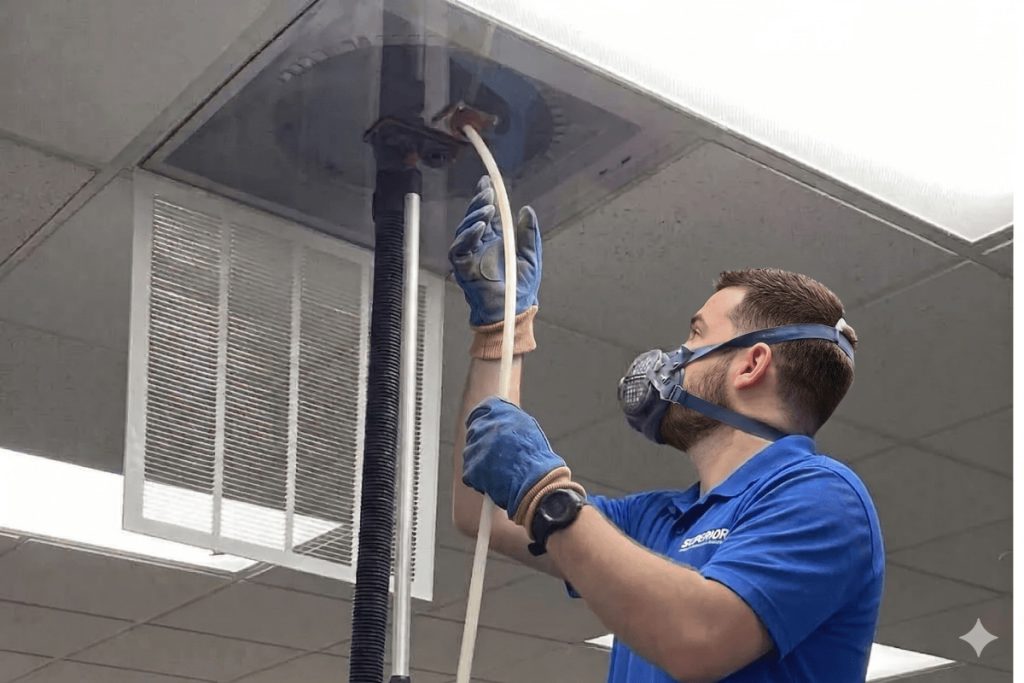
Our NADCA-certified technicians use professional equipment including HEPA-filtered vacuum systems, specialized brushes, and EPA-registered antimicrobial treatments that completely remove smoke deposits while preventing future contamination. We serve communities throughout the Willamette Valley and Portland metro area with multiple locations ensuring prompt, professional service when your family needs it.
Serving Oregon Communities Throughout the Willamette Valley
Portland Metropolitan Area: Portland, Beaverton, Tigard, Lake Oswego, Tualatin, West Linn, Oregon City, Milwaukie, Gresham, Troutdale, Happy Valley, Hillsboro, all Washington, Multnomah, and Clackamas County locations
Mid-Willamette Valley: Salem, Keizer, Woodburn, Silverton, Stayton, Dallas, Independence, Monmouth, all Marion and Polk County locations
Southern Willamette Valley: Eugene, Springfield, Albany, Corvallis, Lebanon, Sweet Home, Junction City, Brownsville, Philomath, all Lane, Linn, and Benton County locations
Contact Dr. Carpet Clean today to schedule comprehensive air duct inspection and cleaning. Call us or visit DrCarpetClean.com to restore the clean, healthy indoor air quality your Oregon home deserves after wildfire season.
Don’t wait for next wildfire season to address contamination from the last. Trust Oregon’s air duct cleaning experts with decades of family ownership, BBB accreditation, and 70+ five-star reviews. Your family’s health deserves professional protection from wildfire smoke contamination—contact us today.